The architecture sits on three statutes working together. The Employment Rights Act 1996 governs the employment relationship and the fair treatment of absent staff; the Social Security Contributions and Benefits Act 1992 and the SSP regulations made under it govern sick pay; and the Equality Act 2010 sits over the top whenever an absence may be linked to a disability. None of these gives an employer a blunt right to demand a doctor's note on day one. The rule is more measured, and getting it right is what separates a defensible request from a clumsy one.
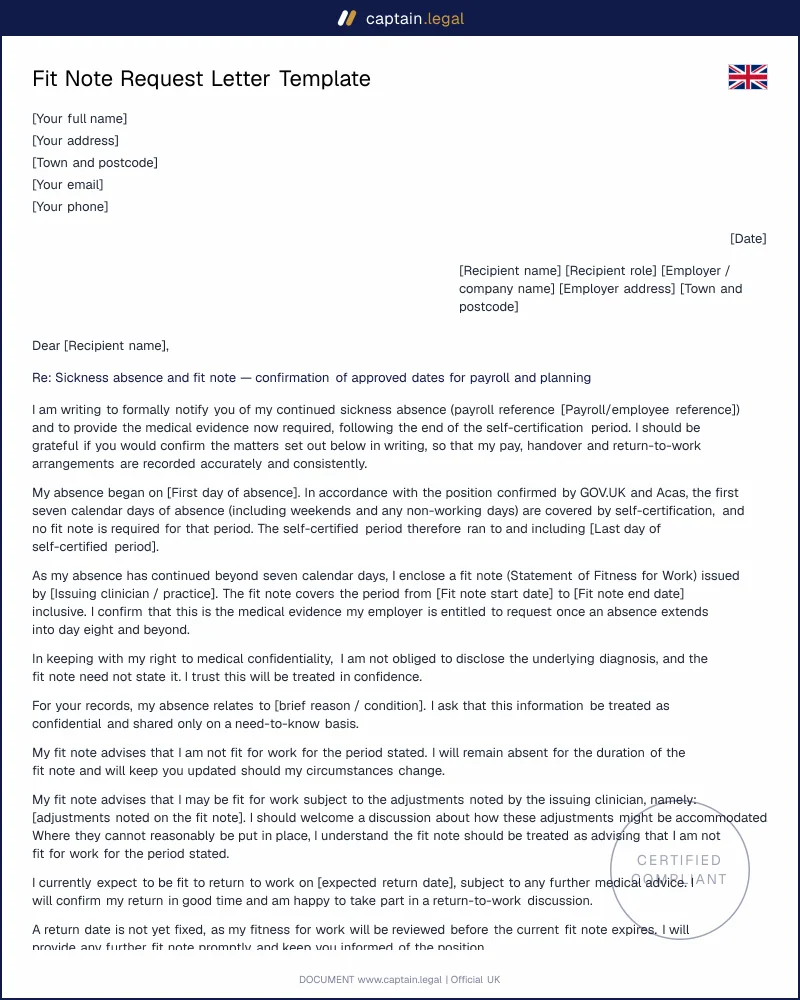
The core entitlement is set out in GOV.UK guidance for employers on fitness to work: where incapacity lasts 7 calendar days or fewer, an employer may accept self-certification verbally, by letter, on form SC2, or on the employer's own equivalent. Where incapacity lasts more than 7 days, the employer may ask the employee for medical evidence, and it is the employer's decision whether evidence is required and what form is acceptable. That is the statutory hook for this letter. The HMRC and DWP position is summarised plainly in the GOV.UK guidance on Statutory Sick Pay and employee fitness to work, which is the source you should anchor any internal policy to.
Two practical cautions matter here. First, you cannot withhold SSP simply because a fit note arrives late: official guidance warns that delays are often caused by an inability to get a GP appointment, which is outside the employee's control. Second, the April 2026 reforms removed the three-day waiting period for SSP, so sick pay can now start from day one, but those reforms did not touch the day-8 fit note rule. The evidence threshold is unchanged. A request letter that conflates "SSP starts sooner" with "I can ask for a note sooner" gets the law wrong. Keep the two ideas separate, and the request stays proportionate and lawful.