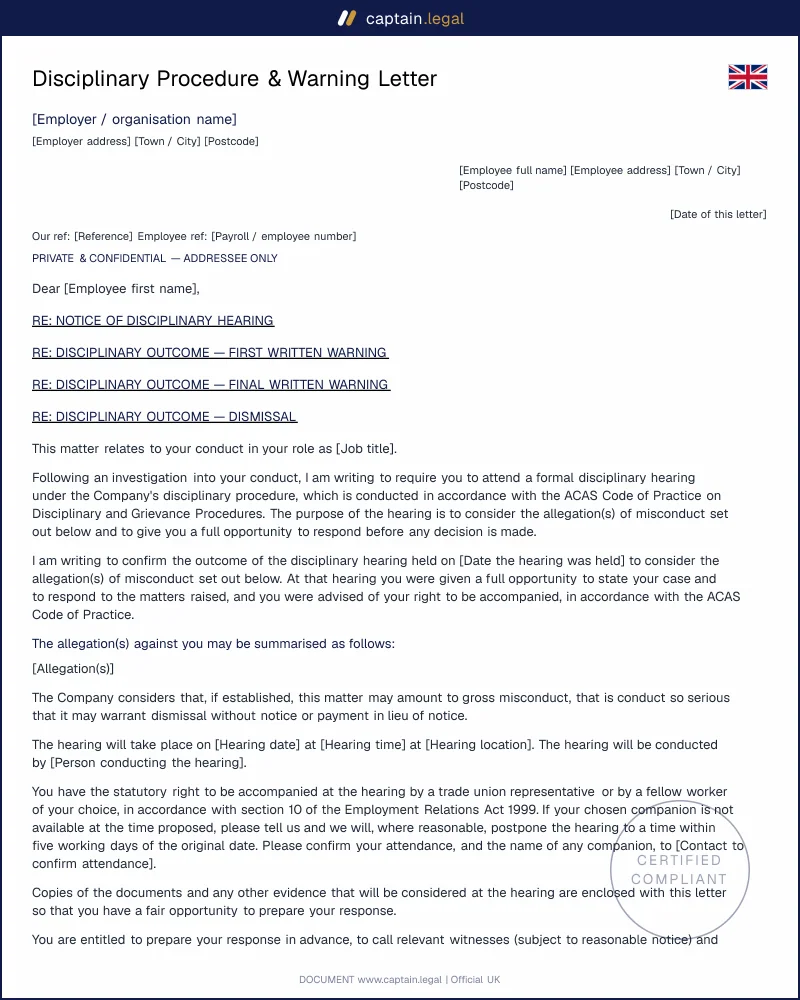
The most common trigger is repeated misconduct that informal management has not corrected: persistent lateness, unauthorised absence, refusal to follow reasonable instructions. Here the pack gives you the graduated route, first written warning, then final, then dismissal, that demonstrates you gave the employee a genuine chance to change before parting ways. The second frequent scenario is capability, where someone is trying but not meeting the standard. Capability follows the same paper trail as conduct but the language differs: you are documenting support, targets, and review periods, not blame.
A third situation is gross misconduct, where the breach is serious enough to justify summary dismissal: theft, violence, a serious safety breach. Even here you still need a fair process. Gross misconduct lets you skip notice, not the investigation and hearing. Employers who march someone off the premises without a meeting routinely lose at tribunal despite having a watertight reason, because they treated the conclusion as obvious and the process as optional.
Two edge cases legitimately complicate things. The first is the employee with under two years' service, who generally cannot claim ordinary unfair dismissal but can still claim automatic unfair dismissal or discrimination, so the Equality Act 2010 keeps your process honest regardless of length of service. The second is suspension: it is a neutral act, not a sanction, and dressing it up as punishment before any hearing taints the whole process. If conduct issues sit alongside a flawed underlying contract, fixing the full-time UK employment contract drafted to Section 1 ERA 1996 first often resolves the dispute without a warning at all.