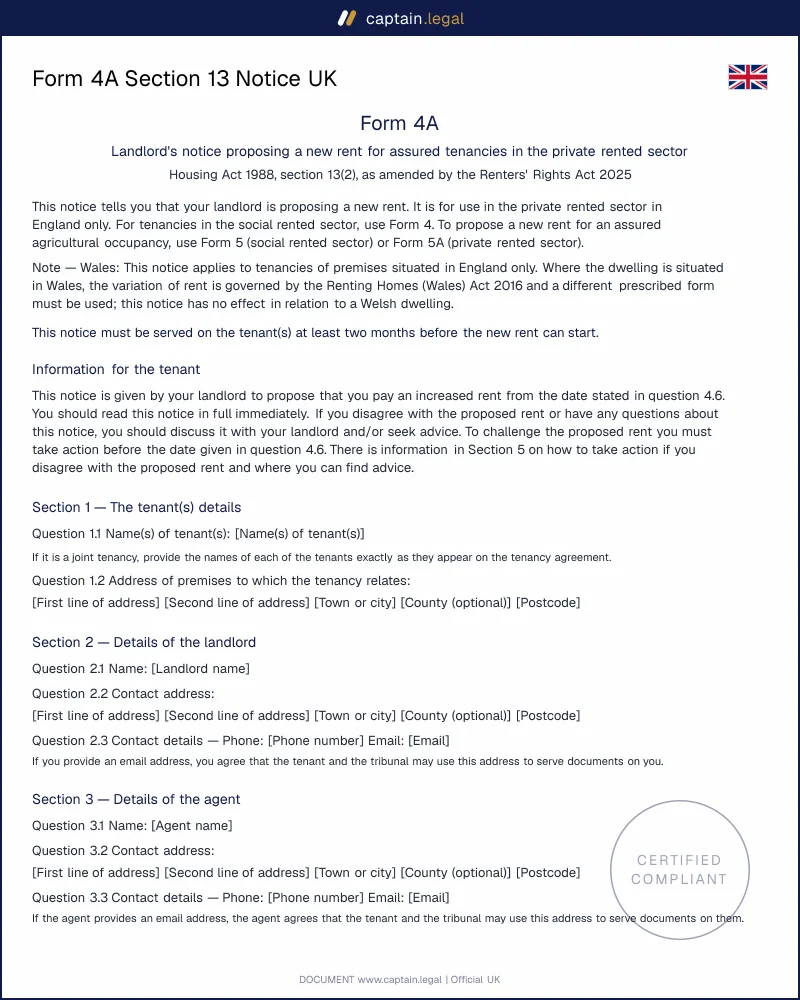
The everyday trigger is the annual review, when costs have risen and the rent has fallen behind the market. On a periodic tenancy that means Form 4A, because there is no longer a contractual clause to fall back on. Most landlords reach for it once a year, which fits neatly with the statutory once-in-12-months ceiling. A landlord who tries to squeeze in a second increase inside that window will find the notice rejected on its face.
A second common situation is the expired fixed term that has rolled into a periodic tenancy. Since 1 May 2026 assured tenancies cannot have a fixed end date, so tenancies that used to convert into a statutory periodic tenancy now simply run on as assured periodic tenancies. The first lawful rent increase on that rolling arrangement goes through Section 13 and Form 4A. You cannot use Form 4A during a fixed term that is still running, which catches out landlords mid-way through an older agreement.
The form also comes into play when a rent review clause has gone stale. Plenty of older agreements still contain "rent increases each April" wording, and landlords assume it still works. It does not. To change the rent lawfully, the increase has to be re-routed through the statutory notice. The same applies where a landlord and tenant cannot reach a voluntary agreement: the moment the conversation stops being a friendly negotiation, Form 4A is the only path that does not need the tenant's signature. If your wider concern is documenting what the tenant actually pays, a UK rent receipt and rent statement template keeps the payment record clean alongside the increase.
One edge case worth flagging: certain tenancies sit outside Section 13 altogether. Holiday lets, company lets, resident landlord arrangements and high-value tenancies above the upper rent limit are not assured periodic tenancies, so Form 4A is the wrong tool. Tenancies in Wales follow the Renting Homes (Wales) Act 2016, and Scotland and Northern Ireland have their own devolved regimes.