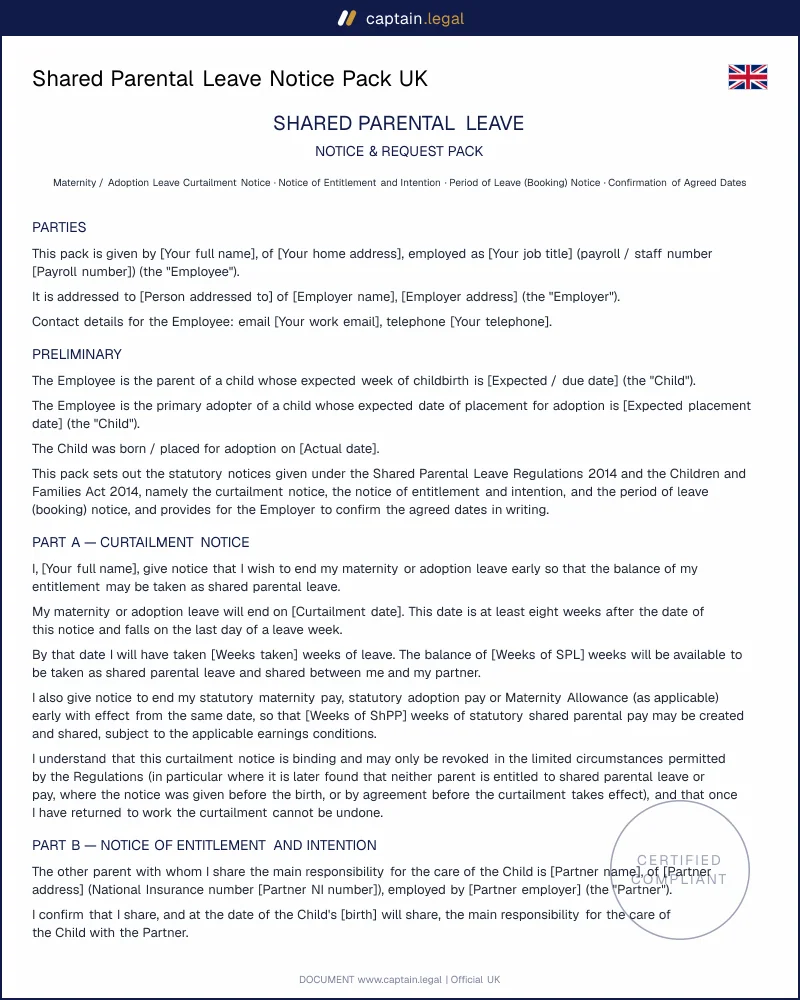
The classic trigger is a birth parent who wants to return to work before her maternity leave runs out, freeing the remaining weeks for her partner. She serves the curtailment notice, both parents declare eligibility, and the partner books the freed weeks. A second common case is parents who want to overlap, taking time together in the early weeks rather than passing the baton, which SPL permits as long as the binding curtailment notice is in place before the second parent starts. Adoptive parents use the same machinery, with the curtailment running against adoption leave or pay rather than maternity.
You also need the pack for the less tidy situations that managers actually deal with. A couple may want discontinuous leave, returning to work between blocks to cover busy periods, which is exactly where a clear booking notice protects everyone if the employer later questions the pattern. Two more edge cases deserve a flag. Where the child arrives more than eight weeks early, the usual eight-week booking notice can be shortened, and your paperwork needs to reflect the actual birth date rather than the projected one. And where one parent's job or relationship is uncertain, serving a curtailment notice too soon is risky, because it binds the birth parent to ending her maternity leave even if the partner later cannot take the leave. The safe practice, well covered in our parental and family leave request guidance, is to confirm both parents' positions before anything binding goes in writing.