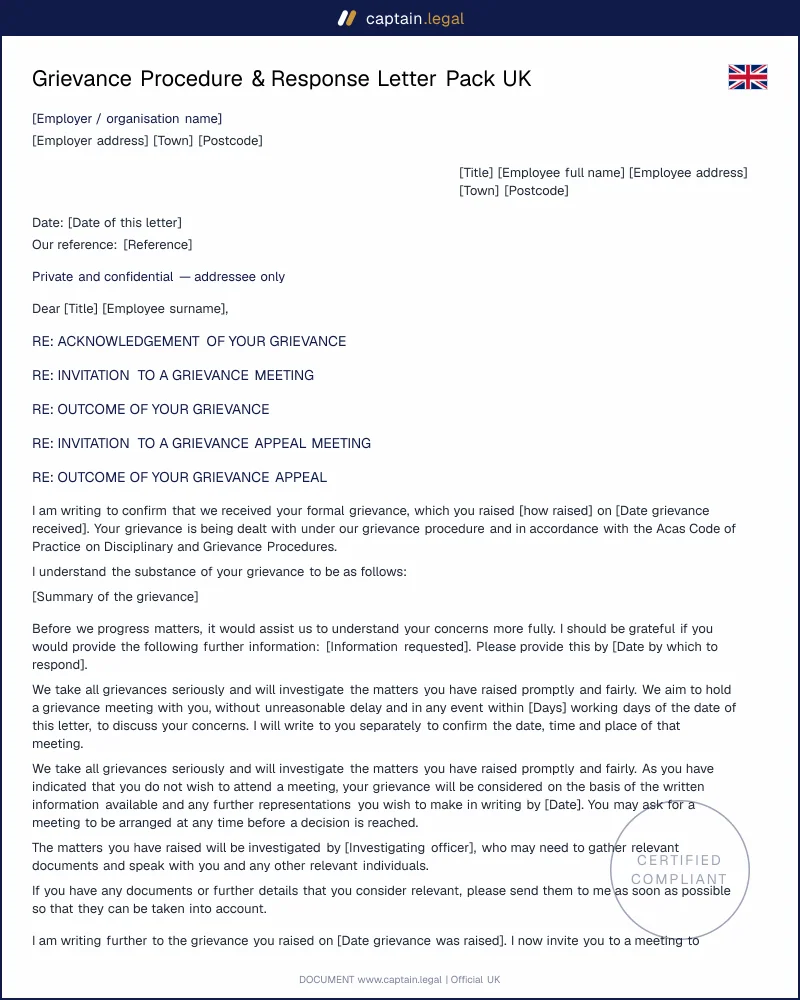
The governing instrument is the ACAS Code of Practice on Disciplinary and Grievance Procedures, issued under section 199 of the Trade Union and Labour Relations (Consolidation) Act 1992. The current version came into force on 11 March 2015, replacing the 2009 Code. The Code is not law in the strict sense, and a breach does not by itself create a claim. Its bite comes from section 207A of the same Act: where an employer unreasonably fails to follow the Code, an employment tribunal can increase any award it makes by up to 25%, and the compensatory award is usually the largest part of a payout. The case of Rentplus UK Ltd v Coulson shows the appeal tribunal upholding the full 25% uplift where a grievance and redundancy process was treated as a sham, so the figure is real, not theoretical.
The right to be accompanied is a hard statutory entitlement, not a courtesy. Under section 10 of the Employment Relations Act 1999, a worker invited to a grievance hearing may bring a fellow worker, a trade union official or a certified union representative. There is no right to bring a solicitor, and an employer is not obliged to allow one unless the contract says so. The pack reminds the employee of this right in the meeting invitation, because forgetting to mention it is precisely the kind of procedural slip the Code penalises.
A few overlapping rules matter. The Equality Act 2010 applies where the grievance touches discrimination, harassment or victimisation, which raises the stakes considerably. Where a grievance and a disciplinary overlap, the Code allows you to deal with them concurrently or to pause one, and our covering notes flag that judgment call. For the authoritative wording, employers should read the ACAS statutory Code of Practice on disciplinary and grievance procedures in full before running a complex case. Captain.Legal also offers a UK dismissal letter template built to section 98 ERA 1996 for situations where a grievance ends in termination.