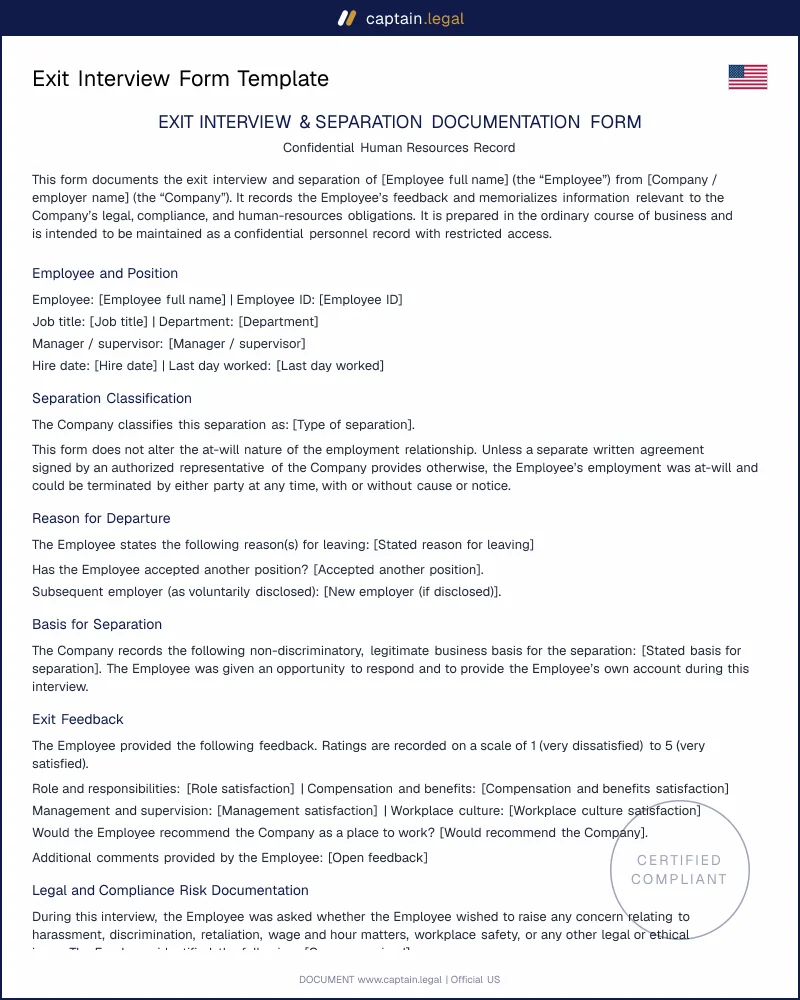
An exit interview form is a written instrument completed at or near the end of employment that documents an employee's reasons for leaving, their assessment of the role and management, and the operational steps tied to their departure. It is not a legal contract and it does not, on its own, release any claims. That distinction matters. A separation agreement with a waiver of claims is the document that buys legal peace; the exit interview form simply gathers information and memorializes what happened.
The form usually blends two layers. The first is feedback: compensation competitiveness, workload, relationship with the manager, growth opportunities, and whether the person would recommend the company. The second is administrative and risk-focused: confirmation that company property was returned, that final-pay expectations were discussed, that the employee was reminded of surviving obligations like confidentiality, and that no unresolved complaints of harassment or discrimination are being raised on the way out.
That second layer is where a generic HR template falls short and a lawyer-grade one earns its keep. The single most valuable line on the form is the one that asks, directly, whether the employee has any outstanding concerns about discrimination, harassment, retaliation, or unpaid wages. A "no" answer, dated and signed, is powerful evidence months later if the same person files an EEOC charge. A "yes" answer is a gift, because it lets you investigate while witnesses and records are fresh rather than learning about the issue through a demand letter.