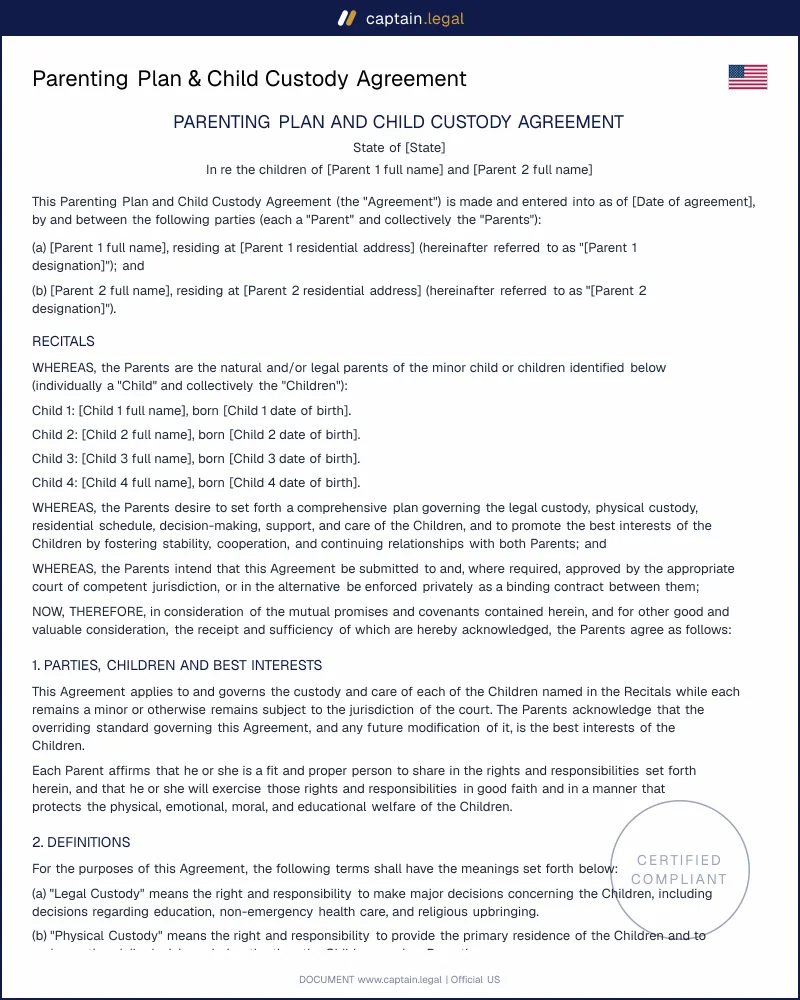
California routes every custody case through Family Code §§ 3011, 3020, and 3040, which grant the court the widest discretion to pick a plan in the child's best interest and explicitly create no presumption for or against joint custody. Contested cases must go through mandatory mediation under § 3170 before any hearing, and every case with minor children requires the FL-105 UCCJEA declaration. A recent finding of domestic violence triggers the § 3044 rebuttable presumption against custody, and a child aged 14 or older generally has the right to address the court about their preference.
Texas speaks its own language. The Family Code never says "custody"; it uses conservatorship under Chapter 153. The statute sets a default that parents be named joint managing conservators under § 153.131 unless that appointment would not serve the child's best interest, often because of a history of family violence under § 153.004. Joint managing conservatorship does not require equal possession time, a point § 153.135 states outright. The fallback schedule is the Standard Possession Order, presumed in the child's best interest, though parents are free to draft a custom possession schedule and have the court adopt it as an agreed parenting plan.
Florida uses parental responsibility and time-sharing under § 61.13. As of July 2023 the statute carries a rebuttable presumption that equal 50/50 time-sharing is in the child's best interest, which a parent must overcome with evidence rather than assertion. Florida requires a detailed parenting plan in every case involving minor children, and the plan must describe how parents will share daily tasks, the time-sharing schedule, and which parent is responsible for healthcare and school-related decisions.
New York has not codified a single best-interest checklist, so judges weigh factors developed through case law, including the primary-caretaker history and each parent's stability. The state does not presume joint custody, and courts will decline to impose it where the parents cannot communicate. Because terminology and presumptions diverge this sharply, a plan drafted for one state should never be filed in another without adjustment. For unmarried parents establishing rights from scratch, review the personal legal document library.