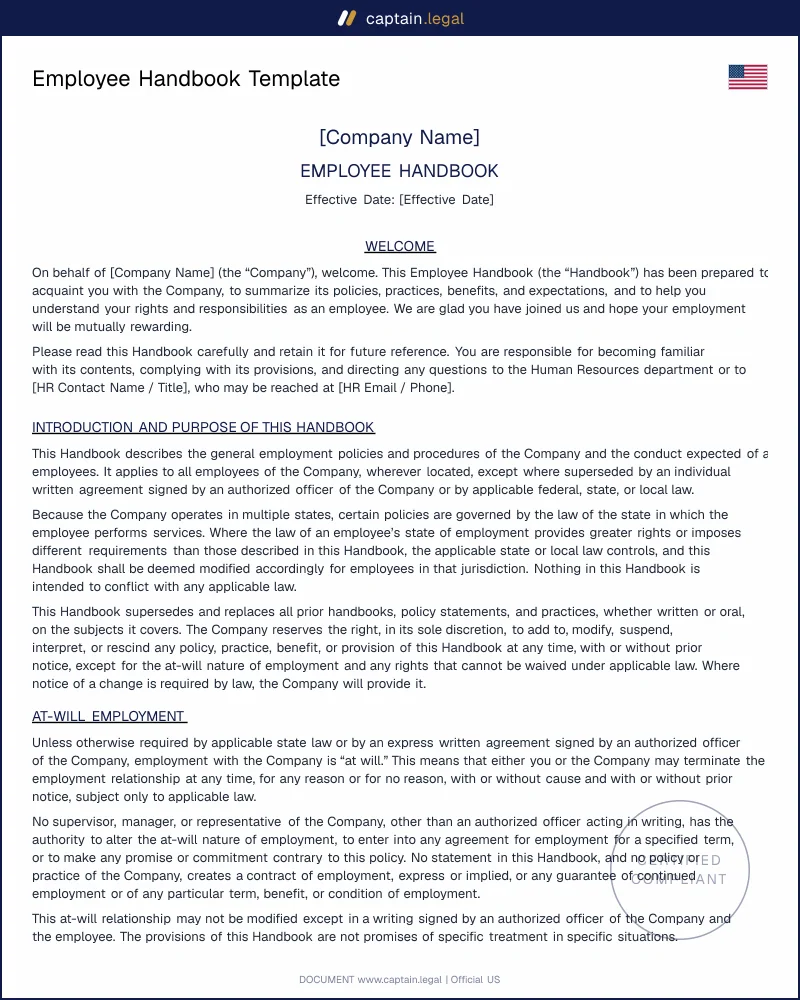
The most common trigger is hitting your first handful of employees, usually somewhere between five and fifteen, when verbal rules stop scaling and managers start giving inconsistent answers. One supervisor approves unlimited remote days, another denies them, and you have an EEO exposure before you realize it. A handbook converts scattered habits into one written standard everyone can point to. The second classic trigger is crossing a compliance threshold: reaching 15 employees brings Title VII and the ADA into play, 20 brings the ADEA, and 50 triggers the FMLA, each of which expects policies you can produce on request.
Companies also need a handbook the moment they expand into a second state, because a policy that was fine in Texas may violate California's meal-break, sick-leave, or final-pay rules. Investors and acquirers ask for it too: during due diligence, the absence of a current handbook reads as sloppy governance and can shave value off a deal. If you are preparing to discipline or terminate someone, an after-the-fact handbook will not help you, the document only protects you if it existed and was acknowledged before the conduct occurred.
One edge case worth flagging is the fully remote startup that assumes it has no "workplace" to regulate. Remote teams still need harassment, data-security, and expense policies, and they often face multi-state wage-and-hour obligations triggered by where each employee physically works, not where the company is incorporated. Another is the company built on independent contractors that decides to convert a few to employees; the day that first W-2 hire starts, the handbook obligations attach, and our employment document templates for US employers cover the surrounding paperwork that needs to move in lockstep.