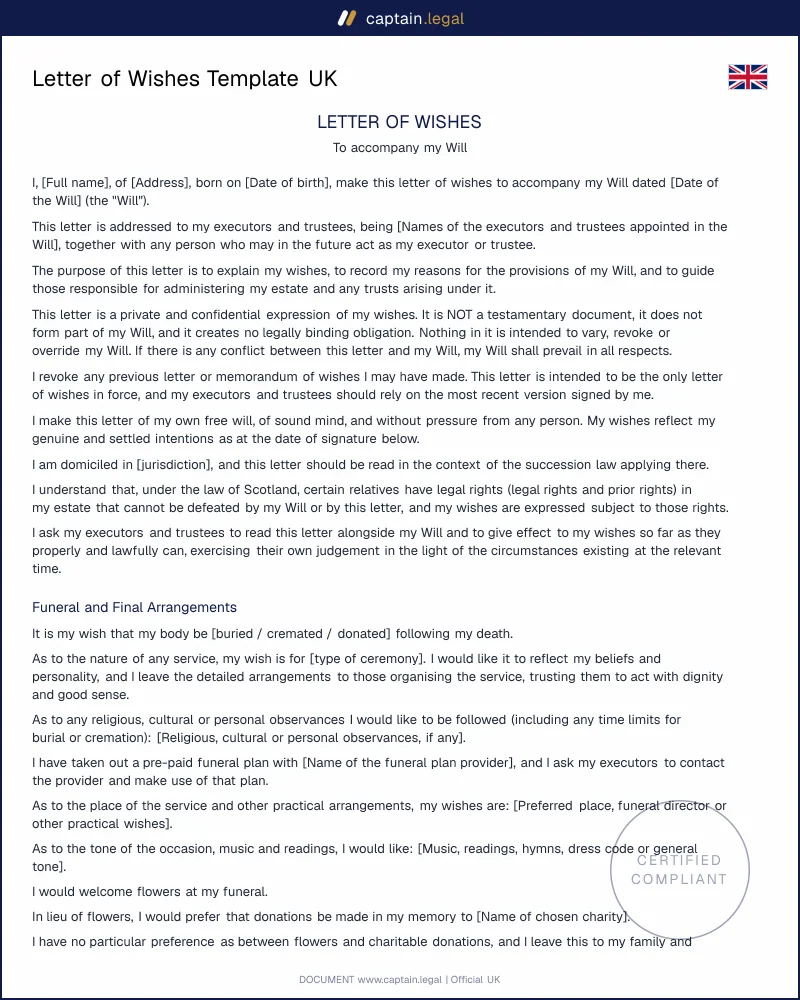
The clearest trigger is a will that leaves assets on discretionary trust, whether for children, grandchildren or a vulnerable beneficiary. Trustees handed wide powers and no guidance are being asked to guess, and guessing is how disputes start. A letter tells them who you really intended to benefit, in what circumstances, and at what pace. A parent might write that a child should not receive capital until twenty-five, or that university costs and a first-home deposit take priority over lump-sum payments. None of that binds the trustees, but it steers them decisively.
The second common situation is a blended family or any inheritance that looks uneven on paper. If you are leaving more to one child than another, or excluding someone entirely, an unexplained will invites a challenge. A calm, dated explanation of your reasoning is frequently what persuades a disappointed relative not to litigate, because contested probate is expensive and slow, and judges give weight to a testator's contemporaneous account of their own intentions.
Funeral and personal wishes make up the third category. Burial or cremation, a humanist or religious service, where ashes should be scattered, who should be told of your death and, sometimes, who should not. These are matters families desperately want certainty on within days of a death, long before the will is even read.
An edge case worth flagging: where you have appointed a guardian for minor children, a separate note to that guardian about upbringing, schooling and religion is invaluable, and it is legally distinct from any letter addressed to your trustees about money. A child travel consent letter handles day-to-day permissions while you are alive; the letter of wishes speaks to what happens after. A second edge case: if you hold assets through a company or partnership, note where the succession documents live, because executors routinely waste weeks hunting for paperwork nobody catalogued.