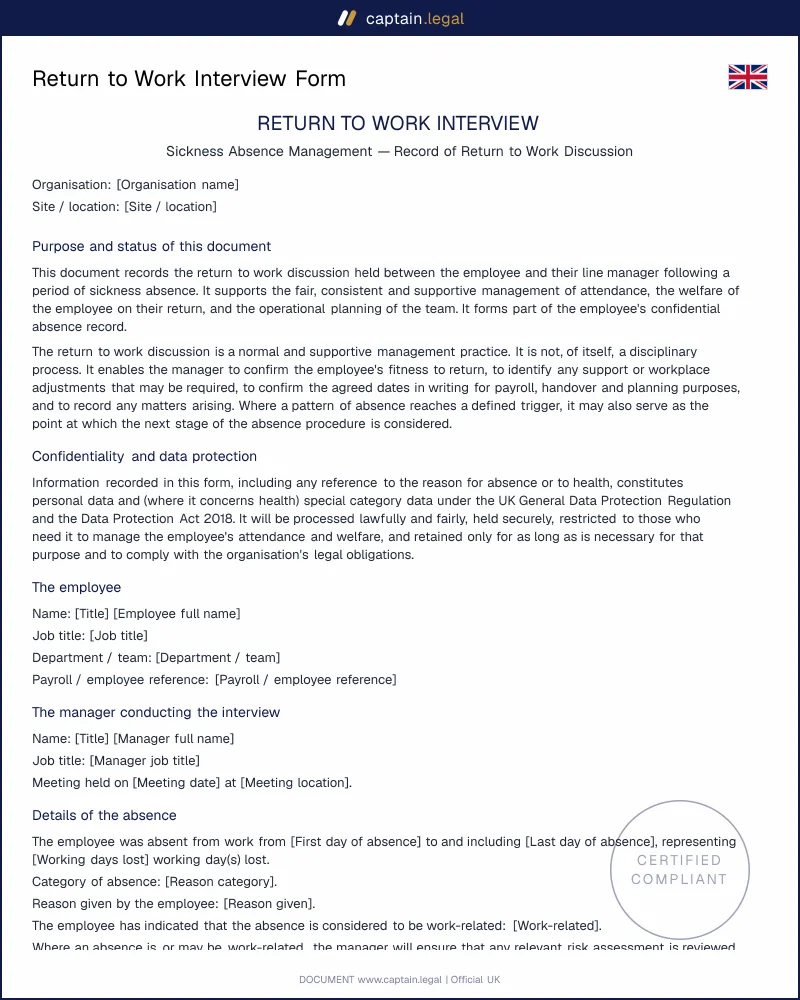
The default answer is short: after every period of sickness absence, however brief. ACAS and CIPD research both point the same way, that organisations running an interview after each absence see measurably lower absence overall, partly because the conversation itself discourages casual days off and partly because it catches genuine problems early. A manager who only interviews after the long absences, or only interviews certain people, has a far bigger problem than inconsistency. Selective use looks discriminatory, and a pattern of interviewing the staff you find inconvenient while waving others through is exactly what a claimant's solicitor will reconstruct from your files.
Beyond the routine single-day absence, three scenarios make the form close to essential. The first is the return from long-term sickness, where a phased return, occupational health recommendations, and adjustments all need recording in one place so that nobody can later claim a promise was made or ignored. The second is the employee with frequent short absences, where the value of the form is cumulative: each individual record is unremarkable, but together they show whether a pattern, a Bradford Factor score, or an underlying health issue is in play. The third is any absence you suspect is disability-related, where the documented conversation about adjustments is your evidence of having discharged the Equality Act duty.
Two edge cases are worth flagging because managers routinely get them wrong. Absence for time off for dependants is not sickness at all, so the form should record it as such and never roll it into a sickness trigger calculation, a mistake that has cost employers dearly. And a return after maternity or other family leave needs a different, gentler version of the conversation; if that is your situation, see the broader UK leave request templates for parental and family leave rather than treating the return as a sickness matter.