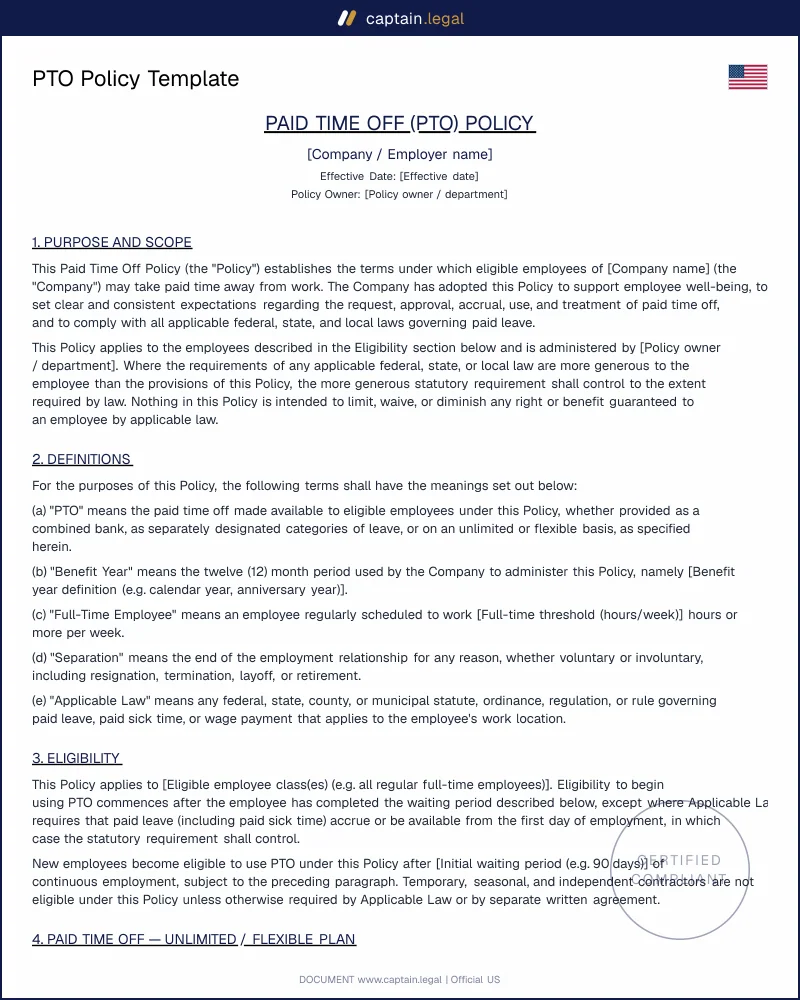
California is the most demanding jurisdiction. Accrued vacation is earned wages under Labor Code §227.3, so use-it-or-lose-it forfeiture is void, unused PTO must be paid in the final check, and that final check is due immediately on involuntary termination. A reasonable accrual cap is permitted, but the policy must stop short of confiscating time already banked. California also layers a statewide paid-sick-leave mandate on top, so a blended bank has to satisfy the sick-leave accrual and usage floor independently.
New York does not require paid vacation, but it enforces written PTO policies strictly and its statewide Paid Sick Leave law sets accrual at one hour per thirty hours worked, with the annual amount scaled to employer size. If your policy promises a vacation payout on separation, the New York Department of Labor will hold you to that written language, which is why ambiguous drafting is more dangerous here than silence.
Texas sits at the opposite end. There is no state requirement to provide or pay out PTO, and a clearly written forfeiture clause is generally enforceable. That freedom is a trap for the unwary: because Texas relies entirely on the written policy, a sloppy or contradictory document is the only thing a court has to read, and it will read it against the drafter. Precision, not generosity, is what protects a Texas employer.
Florida mirrors Texas in having no state PTO mandate and no payout requirement, leaving everything to the policy and the employment contract. The absence of a statute does not reduce your exposure; it concentrates all of it in your handbook language. Across all four states, the lesson is identical: the policy is only as strong as its weakest, vaguest sentence, a point we develop in our at-will employment contract for US employers.