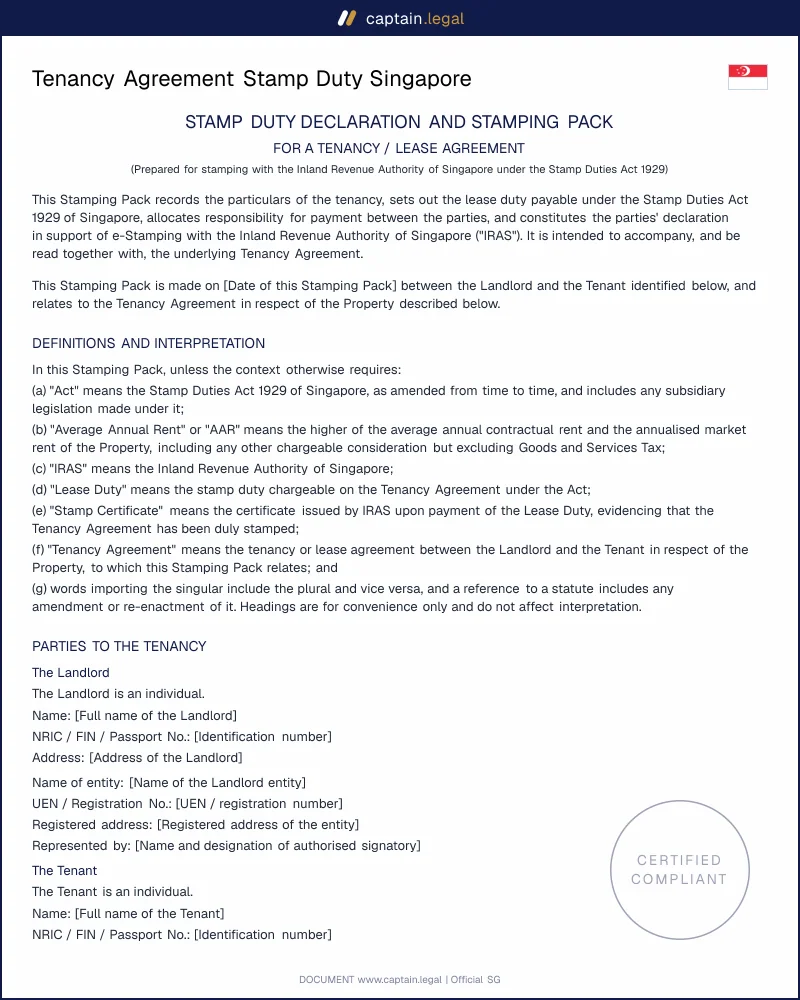
Singapore is a single jurisdiction, so the lease duty rate is uniform across the island. The variation that matters in practice is by property type, and the differences are real enough to change how the pack is completed.
HDB flats sit under the Housing and Development Act 1959 and HDB's own subletting rules. A flat owner cannot sublet a room or the whole flat without HDB approval, and the minimum tenancy period is set by HDB rather than by the parties. Once approval is in place, the tenancy is stamped exactly like any other: 0.4% of total rent for a term of four years or less. The point to watch is sequencing, because stamping a sublet that HDB has not approved records a tenancy the owner was not entitled to grant in the first place.
Private condominiums and landed property carry no subletting cap, so terms are freely negotiable and expatriate tenants commonly insert a diplomatic clause allowing early exit on a job relocation. That flexibility does not change the duty: the AAR is still computed on the full contracted rent across the term, and an early-exit clause does not reduce the chargeable base at the point of stamping. Where premium units in districts such as Orchard or Sentosa Cove command high rents, the absolute duty figure rises in step, which makes the responsibility clause worth negotiating before signing.
Commercial and mixed-use premises add a further wrinkle. Where part of the rent is a percentage of the tenant's gross turnover, IRAS assesses duty on the secured minimum where one exists, and the computation departs from the simple residential formula. A landlord letting retail or office space should treat the duty calculation as a distinct exercise and, if the structure is unusual, build the worksheet around the Stamp Duties Act turnover-rent rules rather than the flat 0.4% shorthand. For employment-linked tenancies where a company leases on behalf of staff, it is worth aligning the arrangement with the relevant Singapore employment and HR documentation.