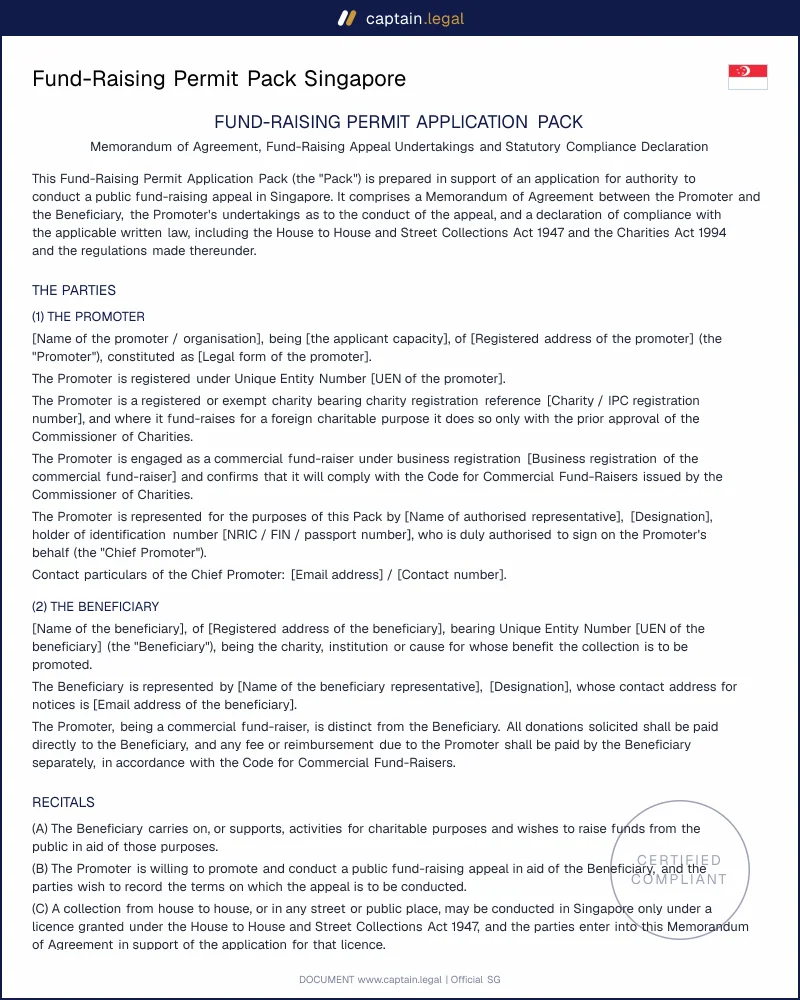
The clearest trigger is a face-to-face public collection: volunteers going door to door, a Flag Day tin-shake outside an MRT station, or collectors stationed in a mall asking shoppers to contribute. Each of these is a classic appeal under the HHSC Act and, unless a charity exemption applies, needs a Police licence before the first approach. The pack becomes necessary the moment a real person is actively soliciting a real member of the public.
Event-based fund-raising is the next large category. A charity dinner, a concert or movie premiere with proceeds pledged to a cause, a walkathon, a car wash, a donation draw or the sale of donation tickets all count as fund-raising appeals, and the sale of donation tickets in particular has been treated as requiring an HHSC licence. Placement of donation boxes sits on a knife-edge: an unmanned box that nobody works actively falls outside section 4 of the HHSC Act, but the moment a collector stands beside it encouraging donations, the appeal is licensable. The presence or absence of active human solicitation is what decides it, not the object collecting the money.
Two edge cases repay attention. Raising funds for a foreign beneficiary requires a Fund-raising for Foreign Charitable Purposes permit from the Commissioner of Charities in addition to any HHSC licence, and a private appeal confined genuinely to friends and relatives, or made only by post, telephone or online, falls outside the licensing net altogether. Committees registered as societies frequently pair a permit application with the internal approvals recorded in an AGM minutes and annual return pack, so that the decision to fund-raise is properly minuted before the appeal is lodged.