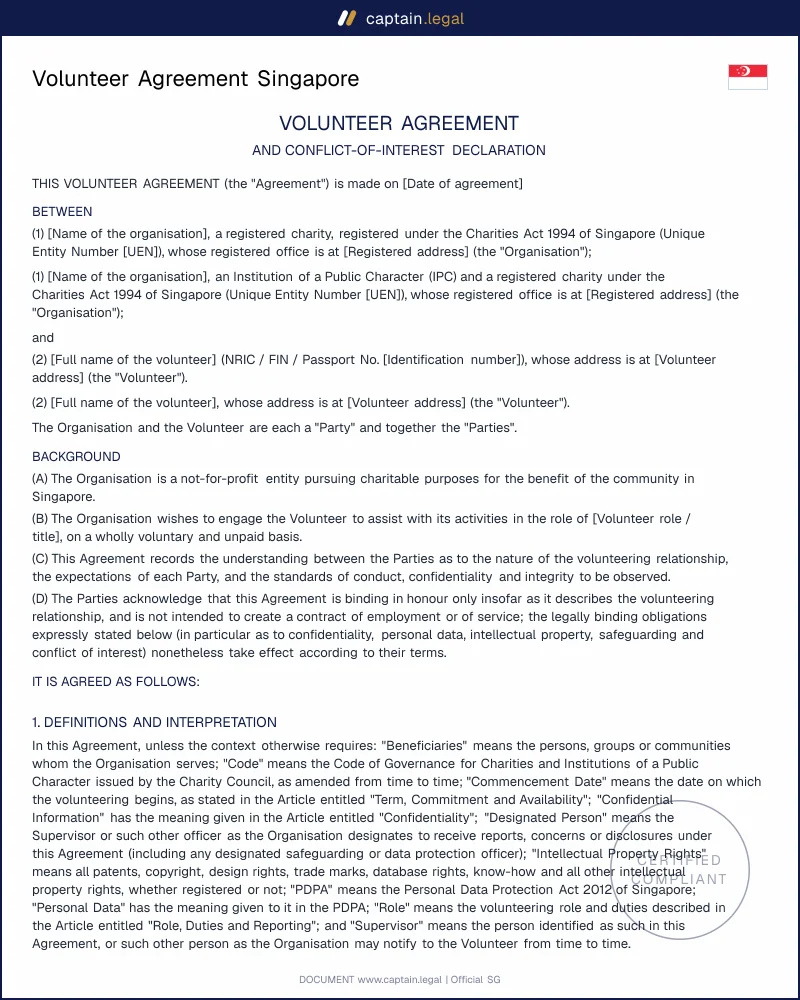
Singapore is a single jurisdiction, so the relevant variation is by legal form and by the kind of work your volunteers do rather than by region. A society registered under the Societies Act 1966 is not a separate legal entity, which means committee members can carry personal exposure; clear conflict declarations and minuted abstentions are part of how a committee protects itself. A company limited by guarantee incorporated with ACRA has separate legal personality, and its directors owe statutory duties under the Companies Act 1967, so the conflict-of-interest declaration doubles as evidence of compliance with directors' disclosure obligations.
Charity and IPC status raises the bar again. A registered charity must follow the Code of Governance for Charities and IPCs, and an Institution of a Public Character, which can issue tax-deductible receipts, faces stricter governance and reporting under the Charities Act 1994. For these organisations the annual declaration is not optional housekeeping but part of the Governance Evaluation Checklist submitted to the Commissioner.
Sector matters most where vulnerable people are involved. A non-profit running youth homes, disability programmes or family services should align its volunteer terms with the safeguarding framework that MSF administers, including the screening and reporting tools used across the social service sector. Where volunteers have unsupervised access to children or vulnerable adults, written safeguarding terms and proper screening are not a courtesy but a baseline expectation. Organisations setting up the governing layer first may want to pair these forms with their society constitution and charity governance documents before onboarding any volunteers.