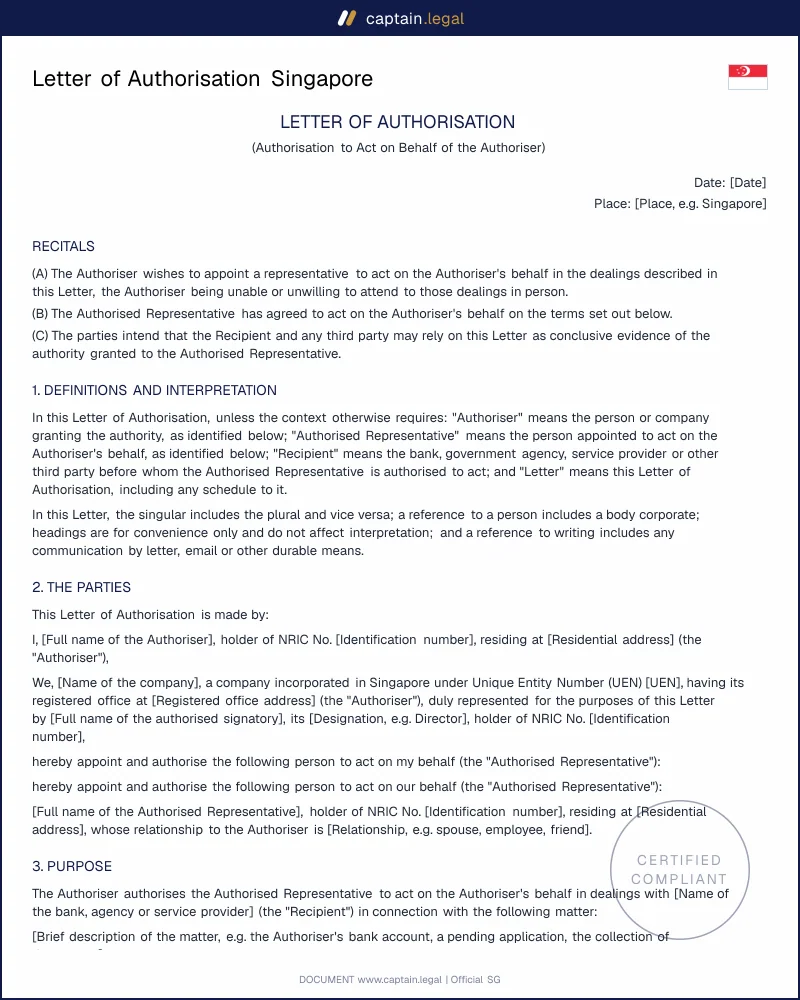
A Letter of Authorisation (often called an authorisation letter or letter of authority) is a written grant of agency. You, the principal, authorise an agent to do a defined act in your name, such as collecting a certified document, picking up a parcel held by Customs, accepting delivery of a vehicle, or relaying instructions to a bank. The legal effect rests on the common law of agency: an act done by your agent within the authority you have given is treated in law as your own act, which is why the third party accepting the letter can deal with your representative as if dealing with you.
It is important to see how this differs from a Power of Attorney. A Power of Attorney is a formal deed, usually prepared by a solicitor, and is the right tool where the act is significant or ongoing: selling property, signing an Option to Purchase, operating a CPF refund, or managing affairs over a long absence abroad. A Letter of Authorisation is the lighter instrument for discrete, low-risk, short-duration tasks where no statute demands a deed. If a bank, the HDB or a land registry insists on a Power of Attorney for a particular transaction, an authorisation letter will not substitute for it, so always confirm the receiving organisation's own requirement before relying on a letter. For routine collection and administrative errands, though, a well-drafted letter is exactly what is asked for, and nothing heavier is needed.