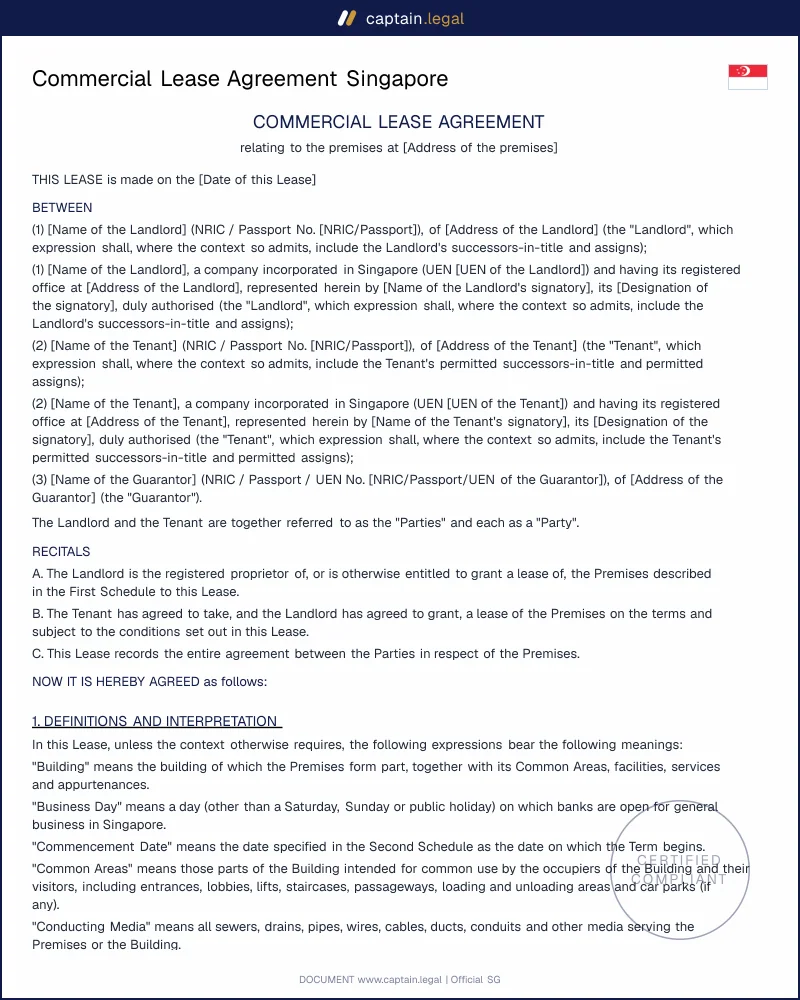
Singapore is a single legal jurisdiction, so there is no state-by-state divergence, but the commercial lease landscape varies sharply by property type and location, and the template should be tuned accordingly. Premises in the Central Business District and Grade A office towers are almost always let by institutional landlords on their own standard forms, with detailed building rules, fixed service-charge structures and strict reinstatement schedules; a tenant's leverage lies in negotiating the fitting-out period and the reinstatement standard rather than the boilerplate. The service charge here is a material line item and should be scrutinised for what it does and does not include.
Retail units in managed malls carry their own layer: promotional-fund contributions, mandatory trading hours aligned to mall operations, and sometimes turnover rent on top of base rent. A retail tenant should confirm whether the rent is pure fixed rent or a fixed-plus-turnover hybrid, because the latter changes the stamp duty computation. F&B premises, whether in a mall, a conserved shophouse, or a standalone unit, add fire-safety, ventilation and grease-management obligations, and conserved shophouse premises in areas gazetted by the Urban Redevelopment Authority carry conservation-related restrictions on alterations to the facade and structure. Industrial and warehouse space, often on JTC-related tenure, is subject to use restrictions tied to the approved industrial activity, and subletting is tightly controlled. Across all of these, the tenant should verify that the permitted use in the lease matches the approved use of the premises under the URA Master Plan, since a lease cannot authorise a use that planning permission forbids. Tenants incorporating a new entity to hold the lease often prepare that structure using our company incorporation and shareholder documents for Singapore.