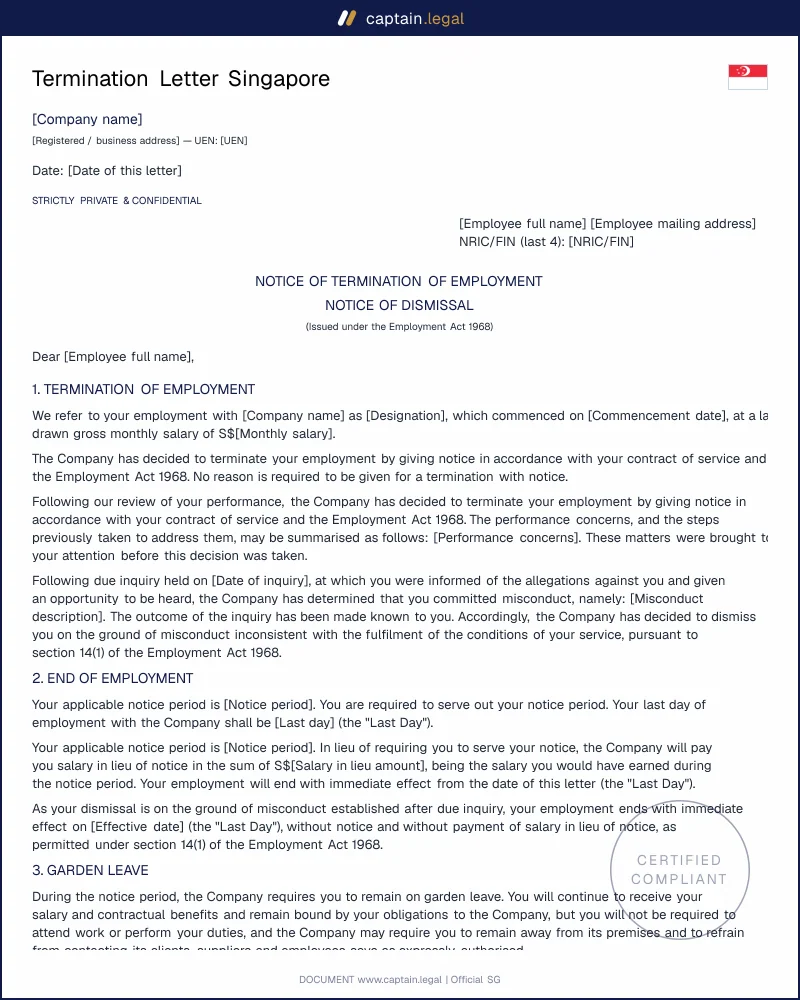
The most common trigger is an ordinary termination with notice, used when the business reorganises, a role disappears, or the relationship simply runs its course. Here no reason is legally required, but the letter still has to state the notice period or the salary paid in lieu, and a quietly documented business rationale is worth keeping in case the exit is later challenged as disguised discrimination. The second scenario is poor performance, which is not misconduct and so runs through the notice route rather than section 14; the letter should reference the performance management trail, the warnings given, and the contractual notice, never the language of summary dismissal. Treating weak performance as misconduct is one of the fastest routes to a wrongful dismissal finding.
Misconduct is the third and most exposed trigger. Theft, dishonesty, insubordination, habitual absence or conduct that brings the employer into disrepute can justify a section 14 dismissal, but only once the due inquiry is complete, and the letter must record that the inquiry happened. A fourth situation is the end of a fixed-term contract, which usually expires on its own terms without a termination letter at all, though a short confirmation of non-renewal is good practice. Two edge cases deserve attention. Where you terminate a foreign employee, the letter triggers a parallel obligation to cancel the Employment Pass or S Pass within a week of the last day, and the work pass cancellation should be sequenced with the final settlement. And where the employee is mid-probation, the same notice rules apply: a probationary exit still needs the contractual notice or salary in lieu, a point many employers miss. The Singapore offer and appointment letter templates sit at the opposite end of this lifecycle and are worth cross-checking for the notice clause you are now relying on.