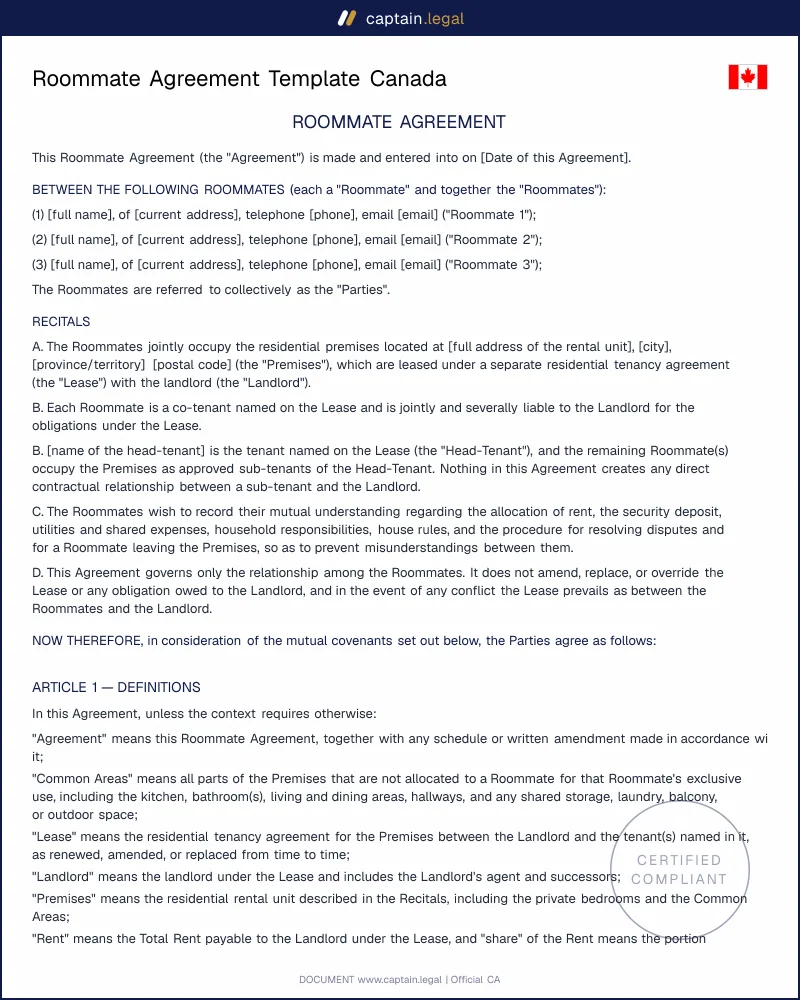
The enforceability of a roommate agreement rests on contract law, not housing legislation, and that shapes everything about how the document is drafted and used. Because the residential tenancy statutes deliberately leave roommate-to-roommate disputes alone, the courts treat a signed roommate agreement like any other contract between adults: offer, acceptance, consideration and an intention to create legal relations. British Columbia's tenant authority is explicit on the point. The Residential Tenancy Branch confirms that disputes between co-tenants fall outside the jurisdiction of the Residential Tenancy Act and cannot be resolved through its dispute resolution service, which pushes those claims into the ordinary civil courts. The same logic applies in Ontario, where the Landlord and Tenant Board hears landlord-tenant matters but will not adjudicate a fight between roommates, and in Alberta, where co-tenant claims proceed through the Alberta Court of Justice.
What this means in practice is that a roommate agreement is enforced where money disputes normally go. In British Columbia a claim under $5,000 goes to the Civil Resolution Tribunal, claims up to $35,000 to Small Claims Court, and larger claims to the Supreme Court of British Columbia. Ontario and Alberta route comparable claims through their own small claims processes. The official British Columbia Residential Tenancy Policy Guideline 13 on the rights and responsibilities of co-tenants sets out how joint and several liability operates and confirms that co-tenants must divide amounts owing among themselves, which is precisely the division a written agreement should record in advance.
One caveat matters more than any other. A court will not enforce terms that are unconscionable, grossly unfair or illegal, and a roommate agreement can never override the protections the lease and the tenancy statute give to tenants. You cannot, for example, use a roommate agreement to evict another co-tenant; only a landlord can end a tenancy, and only through the statutory process. The document allocates responsibilities between roommates. It does not rewrite the lease. For a related document that records the parties bound directly to the property owner, many co-tenants pair their roommate agreement with a residential lease agreement for Canadian rentals.