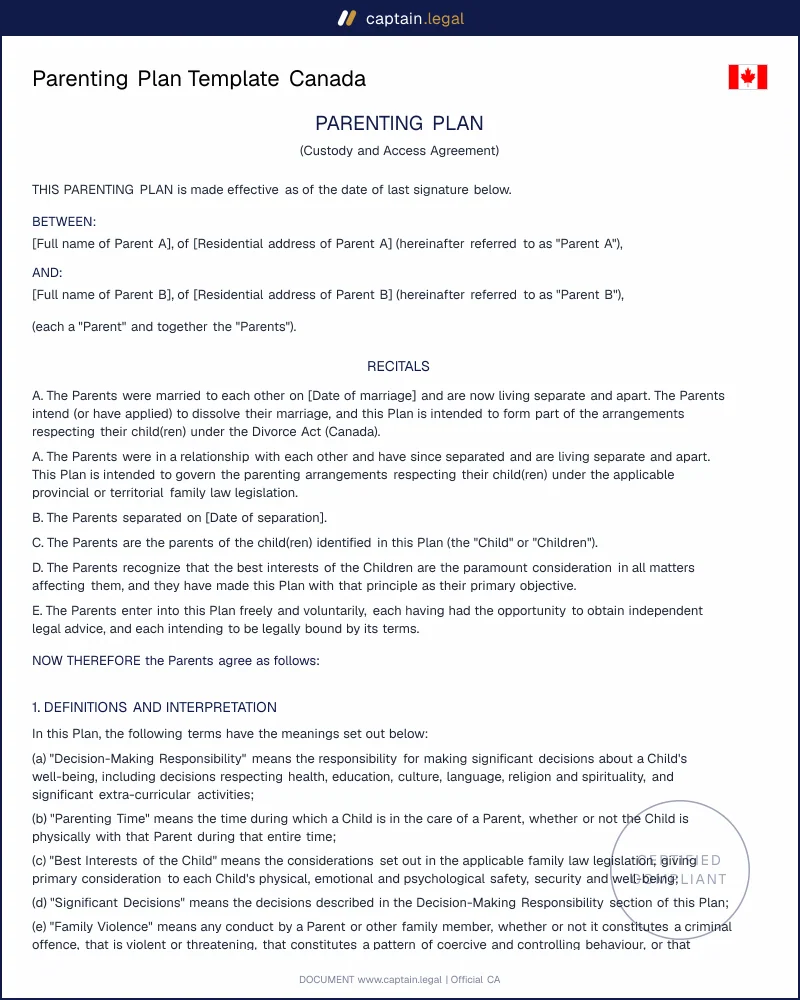
Ontario married parents divorce under the federal Divorce Act, but unmarried parents look to the Children's Law Reform Act, which applies the same best-interests test for parenting decisions. Child support is calculated through the Federal Child Support Guidelines as adopted by O. Reg. 391/97, with section 7 special and extraordinary expenses, things like childcare for work, orthodontics, and significant extracurricular costs, shared between parents in proportion to their incomes on top of the base table amount. Ontario also routinely extends support for children in full-time post-secondary study, so a plan with older children should anticipate that. Enforcement runs through the Family Responsibility Office once an order is in place.
Alberta uses the Family Law Act for parenting arrangements outside divorce and applies the same modern terminology of parenting time and decision-making. The province has long given children a voice in arrangements without granting them decision-making power, and adult interdependent partners have distinct status under provincial property law, which can intersect with a parenting plan when housing is in play.
British Columbia is the outlier in vocabulary. Its Family Law Act uses guardianship, parental responsibilities, and parenting time, and most parents remain guardians after separation unless an agreement or order says otherwise. A B.C. plan should be drafted in that statutory language rather than the federal wording, even though the best-interests analysis is substantively similar. B.C. also formally recognizes parenting agreements that are filed with the court.
Quebec sits entirely apart, operating under the Civil Code of Québec with its own concepts of parental authority that are not interchangeable with common-law parenting terminology, so a parent in Quebec should treat a common-law template as a starting structure only and confirm the civil-law framing before relying on it.