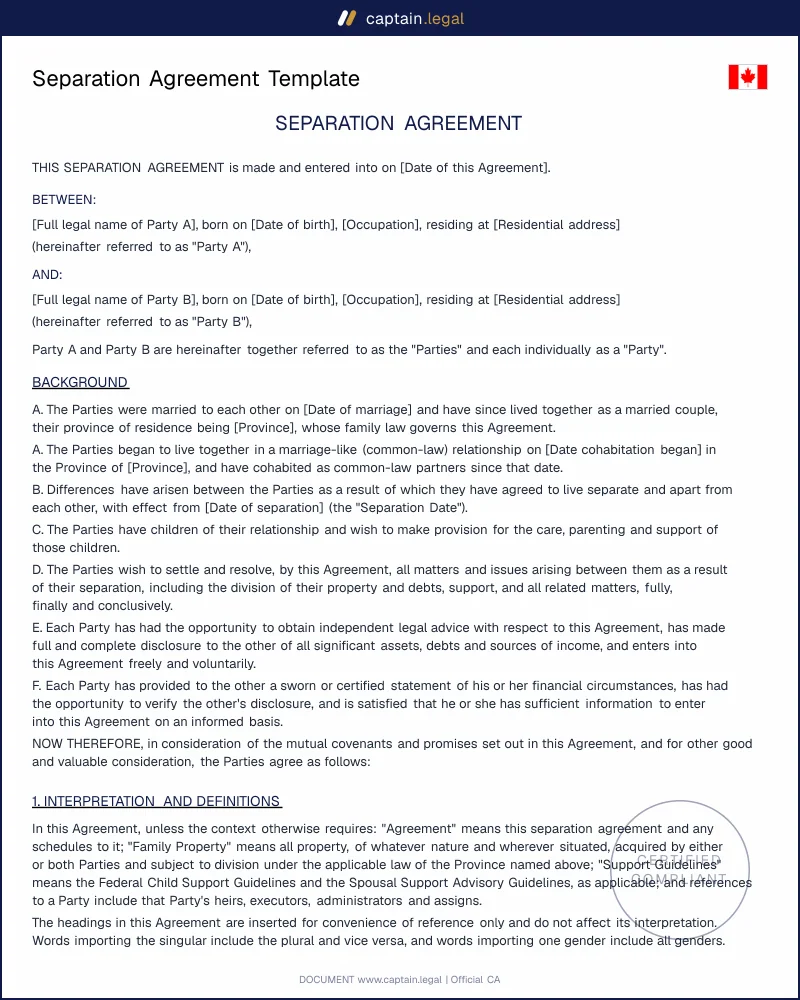
Ontario runs the most familiar regime. Married spouses divide the marriage's asset growth through equalization of net family property under section 5 of the Family Law Act, with the matrimonial home receiving special treatment because its full separation-date value is shared even if one spouse owned it before the wedding. A separation agreement can contract out of equalization, but only in writing, signed, witnessed, and backed by disclosure. Common-law partners in Ontario have no equalization right, so their agreement does the heavy lifting that statute does for married couples. Section 56(4) remains the live risk: weak disclosure can sink the whole document.
British Columbia takes a notably different path under the Family Law Act, S.B.C. 2011, c. 25. It treats married spouses and qualifying common-law partners, generally those who have lived in a marriage-like relationship for at least two years, the same way for property. Each is presumed to share family property and family debt equally, with property brought into the relationship treated as excluded property. That equal footing for common-law partners is the opposite of Ontario's approach, and an agreement drafted for one province can mislead in the other.
Alberta applies the Family Property Act, which since 2020 extends property division to adult interdependent partners as well as married spouses. The agreement should confirm which category each person falls into, since that status decides whether the statutory regime applies at all.
Quebec sits outside this entire discussion. It is a civil law jurisdiction with its own Civil Code concepts of family patrimony and matrimonial regimes, and a common-law-style separation agreement is not the right instrument there. If your relationship is governed by Quebec law, do not use a common-law province template. For other provinces, the Canadian personal and family documents section covers related instruments such as powers of attorney that often accompany a separation.