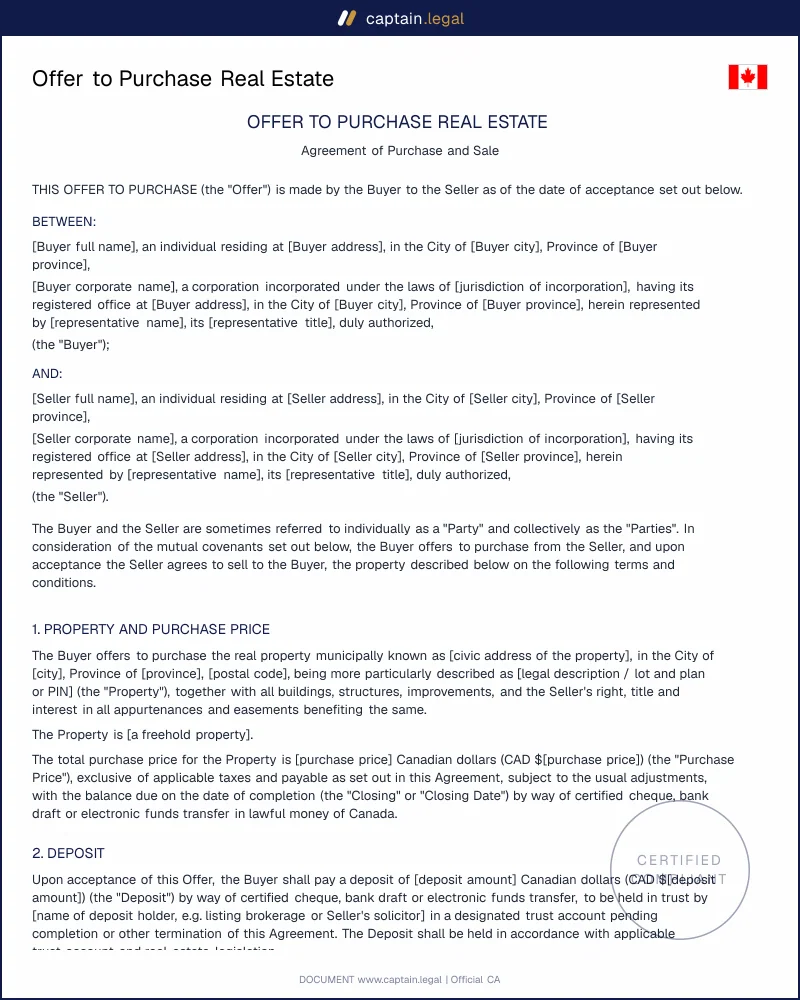
Ontario runs an electronic land titles system and uses marginal-bracket land transfer tax, with the City of Toronto layering its own municipal land transfer tax on top. Buyers of newly built freehold homes have a statutory ten-day cancellation right under recent Homeowner Protection Act provisions, and pre-construction condominium buyers have a ten-day cooling-off period tied to delivery of the disclosure package under the Condominium Act, 1998. The Statute of Frauds, RSO 1990, c S.19 governs the writing requirement, and most resale deals follow the familiar backbone of offer, acceptance, conditional period, title work and registration on closing.
British Columbia does not rely on the old English Statute of Frauds; the writing requirement flows from the Law and Equity Act, and conveyancing runs through the Torrens land title system administered by the Land Title and Survey Authority. Notaries public, not only lawyers, routinely handle residential closings here, and the provincial property transfer tax applies with an additional rate on foreign buyers in designated regions.
Alberta also uses a Torrens land titles system, and notably the original 1677 English Statute of Frauds remains in force in the province, so the writing-and-signature rule for land contracts applies in full. Alberta charges no general land transfer tax, only modest registration fees, which changes the closing-cost arithmetic compared with central Canada.
Nova Scotia and the other Atlantic provinces blend registry and land titles systems depending on whether a parcel has migrated to land titles, so the property description and the search the buyer's lawyer runs differ from one parcel to the next. The region's large stock of rural property outside census metropolitan areas falls outside the federal non-resident ban, which matters for cross-border buyers. Whatever the province, align the offer with the relevant real estate and rental templates for Canada so the supporting paperwork matches the agreement.