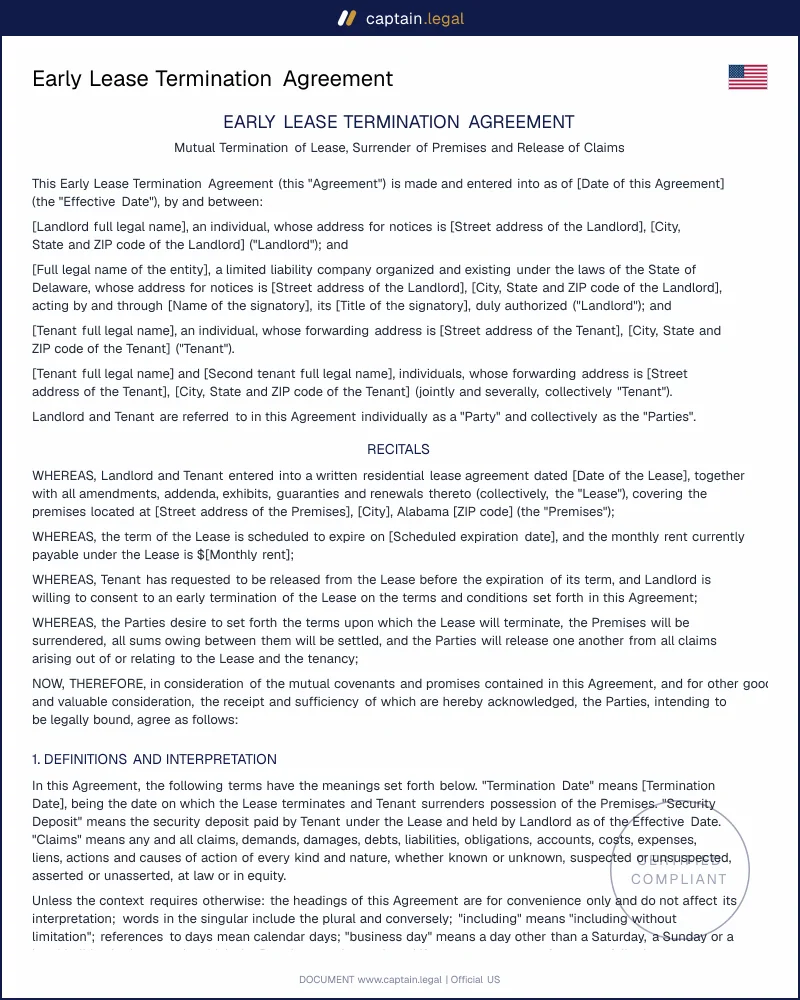
California treats the deposit as the sharpest trap. Civil Code §1950.5(g) gives the landlord twenty-one days after the tenant surrenders to return the deposit with an itemized statement, and Civil Code §1953 voids lease provisions that try to waive those rights, so a release drafted too broadly can be attacked later. Where the property is rent controlled, the agreement itself becomes regulated. San Francisco's Administrative Code §37.9E requires a pre-negotiation disclosure, gives the tenant forty-five days to rescind after signing, and obliges the landlord to file the executed agreement with the Rent Board. Los Angeles runs a parallel scheme under LAMC §151.31 with a thirty-day rescission right and a filing requirement, and a buyout that skips the disclosure can be unwound at any time.
Texas is comparatively permissive on the deal itself and strict on process. Property Code §91.006 makes the duty to mitigate non-waivable, which gives a departing tenant real negotiating leverage: the landlord cannot sit on an empty unit and bill for the balance. The deposit clock in Property Code §92.103 runs thirty days from surrender, but §92.107 suspends it until the tenant provides a written forwarding address, so the agreement should capture that address on its face. Bad-faith retention exposes the landlord to treble damages and attorney's fees. If the tenancy is month to month rather than fixed term, a notice of intent to vacate built to your state's notice period is usually the cleaner instrument.
Florida regulates the fee. Under §83.595(4), a landlord may charge liquidated damages or an early termination fee only if the amount stays within two months' rent and the tenant accepted it by signing a separate addendum at the time the lease was made, with no more than sixty days' notice required. Choosing that remedy means giving up rent beyond the month possession returns. Deposits follow §83.49: fifteen days to refund where no claim is made, thirty days to send written notice of an intended claim, and fifteen days for the tenant to object.
New York combines a strict writing rule with strong mitigation. Real Property Law §227-e is non-waivable and puts the burden on whoever seeks damages, while General Obligations Law §7-108 requires the deposit back with an itemized statement within fourteen days. Rent-stabilized units need extra care, because a buyout offer to a regulated tenant triggers disclosure obligations under the harassment provisions of the New York City Administrative Code §27-2004, including the tenant's right to refuse and to stop being contacted.