
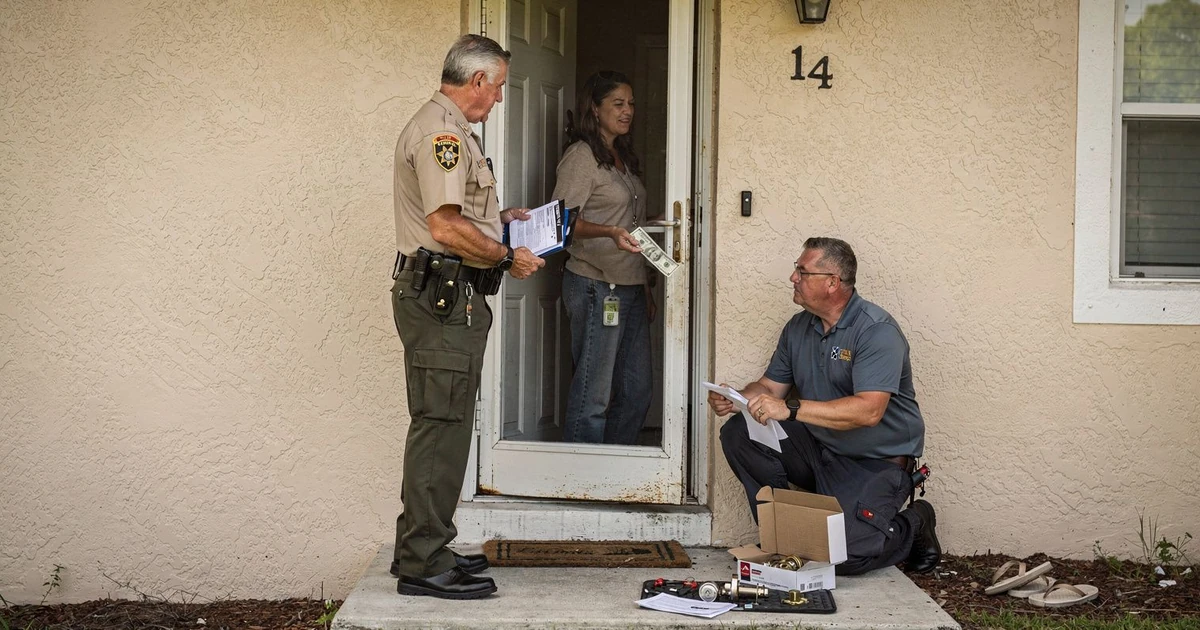
A squatter case and an eviction case are not the same proceeding, and confusing the two is the fastest way for a property owner to lose several months. Since 2024, Florida, Georgia, West Virginia, Texas, and a dozen other states have built sheriff-administered removal tracks that bypass the courthouse entirely for genuine unauthorized occupants. Those statutes are narrow. They turn on whether the person in the dwelling has ever been a tenant, and the document that answers that question is your notice to quit.
Landlords who assume the new laws let them skip paperwork learn the opposite lesson. The affidavit-to-sheriff route works precisely because the owner swears the occupant was never a tenant, and a defective or missing notice trail is exactly what lets an occupant flip the case back into a full eviction with a counter-affidavit.
Squatter or holdover tenant: the classification that decides everything
The statutes drawing the line use narrow language, and the drafting is deliberate. Under Fla. Stat. § 82.036, the sheriff acts only where the occupant unlawfully entered, the property was closed to the public at the time of entry, no litigation between owner and occupant is pending, the owner has already directed the person to leave, and the occupant is not a current or former tenant under any lease, an immediate family member, or a person named on the title. Texas built the same architecture into Property Code ch. 24B, added by SB 1333 and effective September 1, 2025. The elements track almost word for word.
Every one of those elements is a factual assertion an occupant can contest, and the tenant carve-out is where cases collapse. Somebody who signed a lease and stayed past the term is a holdover tenant, not a squatter, and no sheriff track reaches them. Neither does it reach the ex-roommate whose name never made it onto the lease but who paid you rent for eight months, nor the family member you let stay through a divorce. Accepting money from an occupant, even once, even labeled as a utility contribution, can manufacture the tenancy that disqualifies you from the fast track. Practitioners see this weekly: an owner tries to defuse a bad situation with an informal payment arrangement, then discovers the arrangement is the reason the sheriff will not act.
The second trap is the fraudulent lease. Occupants who have studied these statutes show up with a document purporting to be a lease from a prior manager or a fictitious agent. Florida's complaint form anticipates this and requires the owner to swear that any lease an occupant may produce is fraudulent. Swearing that under penalty of perjury when you are not certain of the property's rental history is a serious exposure, and it is why owners with any gap in their records should file a conventional eviction instead.
Legal framework: the 2024 to 2026 statutory wave
Florida moved first. HB 621, signed March 27, 2024 and effective July 1, 2024, created Fla. Stat. § 82.036 and gave residential owners a verified complaint they submit directly to the sheriff of the county where the property sits. Once the sheriff verifies record ownership, the statute directs the officer to serve a notice to immediately vacate on all unlawful occupants and put the owner back in possession without delay. The owner may also ask the sheriff to stand by while locks are changed. The statute carries a matching deterrent: an occupant removed in violation of its terms may sue for actual damages plus treble the fair market rent of the dwelling, along with costs and fees.
Georgia's HB 1017, the Georgia Squatter Reform Act, took effect April 24, 2024 and works through the magistrate court rather than the sheriff alone. It amended O.C.G.A. §§ 44-11-30 through 44-11-33, allowed police and marshals to serve an owner's affidavit alongside county sheriffs, and created the offense of unlawful squatting at O.C.G.A. § 16-7-21.1. The mechanism gives the occupant three days to file a counter-affidavit after the owner's affidavit is exhibited. No counter-affidavit means a writ of possession issues instanter. A counter-affidavit converts the matter into a contested hearing, and practitioners report that sophisticated occupants use the three-day window strategically for exactly that reason.
West Virginia went furthest in a different direction. HB 4940, effective June 2024, added W. Va. Code §§ 55-3C-1 and 55-3C-2 along with § 37-6-31, and it does something the other statutes do not: it declares that squatters are not tenants, that squatting is synonymous with trespass, and that no court of the state shall require the use of eviction or a similar procedure to remove a squatter. Removal in West Virginia runs through criminal trespass and arrest rather than a civil possession action.
Texas legislated twice. SB 1333 created the sheriff and constable removal track in Property Code ch. 24B effective September 1, 2025, while SB 38 overhauled the ordinary eviction process for suits filed on or after January 1, 2026, compressing hearing timelines and allowing summary disposition in uncontested cases. The two operate on different populations: 24B reaches true unauthorized occupants, SB 38 reaches everyone including lawful tenants. For a working overview of how notice requirements sit inside the broader eviction framework, the U.S. Department of Housing and Urban Development's tenant rights resources by state collect the state-by-state landlord-tenant authorities in one place.
Why self-help remains illegal even where squatting is criminal
Nothing in this legislative wave repealed the prohibition on self-help eviction, and owners misread the headlines on this point constantly. Changing the locks, removing a door, cutting utilities, or hauling belongings to the curb is unlawful in every state when the occupant has any colorable claim to possession, and the penalties are set at levels designed to make the shortcut irrational.
Texas Property Code § 92.0081 is the model. A landlord may not remove a door, window, or lock mechanism, and may not intentionally exclude a tenant from the premises except by judicial process, outside narrow exceptions for bona fide repairs, abandonment, or a heavily proceduralized rent-delinquency lockout. Violate it and the tenant recovers a civil penalty of one month's rent plus one thousand dollars, actual damages, court costs, and attorney fees, and can obtain a writ of re-entry from the justice court before any trial on the merits. The statute voids any lease clause purporting to waive it.
The danger in a squatter scenario is subtler than in a straightforward tenancy. An owner who is genuinely convinced the occupant is a trespasser, and who is wrong about the tenancy classification, has committed an illegal lockout with all the statutory consequences attached. The sheriff-affidavit statutes exist precisely so that a public officer, not the owner, makes the removal. Use the officer, even when the outcome feels obvious. Where the classification is uncertain, serving a proper notice to quit and filing a conventional eviction costs weeks but eliminates the treble-damages and civil-penalty exposure entirely.
The notice to quit as the document that proves classification
Owners think of the notice to quit as a procedural hurdle before filing suit. In the squatter context it functions as evidence, and the distinction matters at the moment a sheriff or magistrate decides whether to act.
Consider what the Florida and Texas complaint forms actually ask you to swear. Both require that the owner or the owner's agent directed the occupant to leave and that the occupant did not go. A dated written demand, served and documented, is how you prove that element. An owner who relied on a phone call and a text message can still swear the statement, but has nothing to show when the occupant tells the deputy no such demand was ever made. A written notice to quit, served by personal delivery or posted and mailed with the method recorded, converts a contested factual assertion into a documented one.
The notice also fixes the classification on the record. A notice served on a named individual with no reference to any lease, demanding that an unauthorized occupant vacate, reads very differently from a pay-or-quit notice demanding arrears. Serving the wrong form undercuts your own affidavit: a landlord who demands rent from someone is describing a tenancy. Practitioners tell owners to decide the classification first and then generate the matching document, never the reverse. Captain.Legal's eviction notice template covering 3-day and 30-day notices to quit branches on the ground for termination for exactly this reason, keeping unconditional-quit language separate from pay-or-quit language.
Prevention: screening and paperwork before anyone moves in
Every owner who ends up in a squatter proceeding had a gap somewhere upstream. The vacant unit nobody inspected for six weeks, the informal arrangement with a friend of a tenant, the handshake month-to-month that was never papered.
Screening closes the first gap. A completed rental application form for U.S. landlords creates a dated record of who applied, what they disclosed, and what you verified, which is the file you produce when someone later claims a prior manager leased them the unit. Papering the tenancy closes the second. Periodic arrangements are where classification disputes concentrate, because there is often nothing in writing at all, and a month-to-month rental agreement template built for U.S. periodic tenancies at least establishes who the tenant is, what the notice period is, and who else may occupy the unit.
Shared-occupancy situations deserve their own document. Roommates who were never on the lease are the single most common source of ambiguous classification, and a roommate agreement covering CA, TX, FL, and NY records who has permission to be there and on what terms. For the underlying tenancy itself, a properly drafted residential lease agreement for U.S. landlords names every adult occupant, which is what lets you say with confidence, months later, that the person in the dwelling never held a lease. Each of these generates in Word and PDF, so the signed original goes in the evidence file and the editable version stays available when facts change.
Errors that cost owners the fast track
The recurring mistake is accepting money. An owner who takes a partial payment, a security deposit, or a utility reimbursement from an unauthorized occupant has arguably created a tenancy, and in most states the sheriff track closes immediately. The same applies to informal permission: telling someone they can stay until the end of the month converts a trespasser into a licensee or a tenant at sufferance, depending on the state, and neither qualifies for summary removal. A second error is swearing the affidavit without verifying the property's full rental history, particularly where a prior property manager handled leasing. Signing under penalty of perjury that no lease exists, then discovering one did, is a criminal exposure layered on top of the wrongful-removal damages.
A third error is treating the new statutes as nationwide. They are state law, they differ substantially in mechanism, and several states have no fast track at all. What works in Florida through a sheriff's affidavit runs through a magistrate court in Georgia and through criminal trespass in West Virginia. A fourth is serving a notice that names only one occupant when several adults are in the dwelling, which leaves the unnamed occupants in possession after the named one is removed. The fifth, and the most expensive, is losing patience and changing the locks while the affidavit is pending. The wrongful-removal remedies in these statutes were written to be punitive, and they attach even when the owner's underlying belief about the occupant was correct.
Frequently asked questions
Is a notice to quit legally valid if I download a template instead of hiring a lawyer?
Yes. Drafting and serving a notice to quit is something landlords do directly in all fifty states, and no statute requires an attorney's signature on the document. Validity turns on two things: whether the content matches the statutory requirements of the state where the property sits, and whether service was properly executed and documented. A template with state-specific branching handles the first. The second is entirely on you, which is why the proof-of-service block matters as much as the notice itself. Keep the signed copy and the service record together, because a magistrate or sheriff will ask for both before acting.
Can I use the Florida sheriff affidavit if the occupant claims to have a lease?
Not comfortably. Fla. Stat. § 82.036 requires the owner to swear that the occupant is not a current or former tenant and that any lease produced is fraudulent. If you know a lease exists, or cannot rule one out because a prior manager handled leasing, that statement is not one you should sign. The correct path is a conventional unlawful detainer or eviction action where a judge resolves the lease question with evidence. Wrongful removal under the statute exposes the owner to treble the fair market rent plus damages, costs, and fees, which dwarfs the cost of filing properly.
How long does the occupant have to respond in Georgia?
Three days. Under the Georgia Squatter Reform Act, once the owner's affidavit is exhibited to the occupant by a sheriff, marshal, or police officer, the occupant has three days to produce a counter-affidavit asserting a legal basis for occupancy. If none is filed, the magistrate court may issue a writ of possession instanter and law enforcement can remove the occupant without a formal eviction hearing. If a counter-affidavit is filed, the matter becomes a contested hearing where the occupant must present a lease, rent receipts, or other evidence of a right to possess.
Can I download the eviction notice in Word and PDF?
Both formats come with the document. The Word version stays editable so you can add facts the standard template does not anticipate, such as a description of how entry occurred or a reference to a specific prior demand. The PDF is the finalized version you print, sign, and serve. Keep at least two printed copies: one for the occupant and one for your evidence file alongside the proof of service. Both formats remain in your account for re-download if a first service attempt fails and you need to reissue with corrected dates.
Does West Virginia still require an eviction proceeding for squatters?
No. W. Va. Code §§ 55-3C-1 and 55-3C-2, added by HB 4940, state that squatters are not tenants, that squatting is synonymous with trespass, and that no court of the state shall require the use of eviction or a similar procedure to remove a squatter. Removal runs through criminal trespass, with law enforcement acting once the owner establishes ownership. The classification question does not disappear, though. Someone who held a lease is still a tenant and still goes through the ordinary process.
What does the Texas SB 38 change mean for ordinary evictions?
SB 38 applies to eviction suits filed on or after January 1, 2026 and restructures the civil process rather than criminalizing anything. It compresses court timelines, standardizes notice delivery methods and required notice content, requires suits to be filed in the justice precinct where the property sits, and allows summary disposition in uncontested cases where the occupant produces no valid evidence. Lawful tenants with valid leases still receive the statutory notice period, typically at least three days to vacate for non-payment under Property Code § 24.005 unless the lease sets a different period.
What happens if I change the locks while the affidavit is pending?
You convert a strong position into an expensive one. In Texas, Property Code § 92.0081 gives an excluded tenant a civil penalty of one month's rent plus one thousand dollars, actual damages, court costs, and attorney fees, plus a writ of re-entry obtainable from the justice court before any trial. Florida's squatter statute independently exposes an owner who removes someone outside its terms to treble the fair market rent. The exposure attaches based on the occupant's legal status, not on how confident you were about it, which is why every one of these statutes routes removal through a public officer.
Do these laws apply to commercial property?
Mostly not. Fla. Stat. § 82.036 and Texas Property Code ch. 24B both speak to residential real property and dwellings. Commercial squatting is handled through ordinary trespass law and commercial unlawful detainer actions, and the lease itself usually dictates notice and cure procedures rather than a statutory floor. Owners of mixed-use buildings should treat each unit according to its actual use rather than the property's overall classification, because a residential unit above a storefront falls under the residential statute.