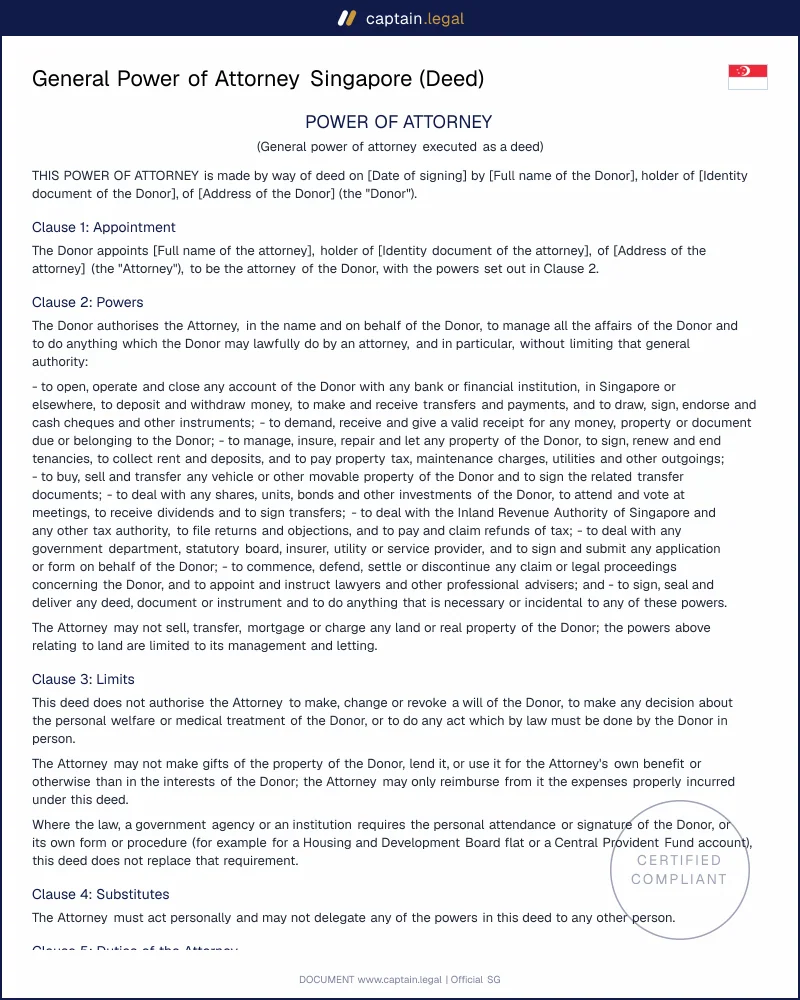
The deed opens with the identity of the donor and of one or two attorneys, each with a passport, NRIC or FIN reference. With two attorneys you decide whether they act jointly, so that both must sign every document, or jointly and severally, so that either can act alone. The template then spells out what happens if one of them dies, becomes bankrupt or steps down: under a joint appointment the whole power ends, under a several appointment the survivor carries on.
The powers clause changes with your answer. A general power lists the usual heads, from bank accounts and tenancies to vehicles, investments, tax, legal proceedings and the signing of deeds; a property power is tied to one address, a finance power to accounts, investments and IRAS. A separate question decides whether real property may be sold or mortgaged; if you answer no, the attorney can only manage and let. Limits follow in every version: no power to make a will, no medical or welfare decisions, no gifts and no personal use of your money, and no substitute unless you allow one.
The closing clauses protect everyone who relies on the document. The attorney must keep your assets separate, keep records and account to you on request. You ratify what is done within the deed and indemnify the attorney for acts done in good faith, while banks and buyers may rely on it until they receive notice of revocation. Duration is open or fixed to an end date, and the execution page carries the witness certificate and a specimen signature for each attorney.

 Singapore law 2026