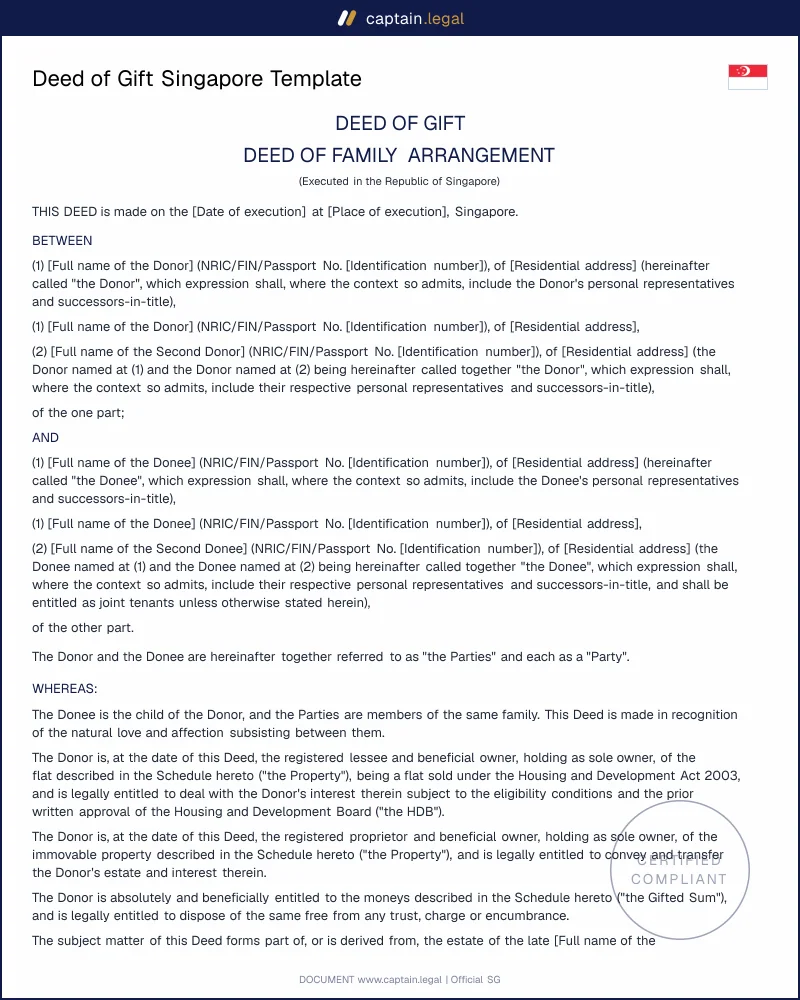
Singapore is a single jurisdiction, so there is no cantonal or state layering, but the asset type drives sharply different procedures and it pays to treat each category on its own terms. For private residential property, the deed is only the first step: after stamping, a separate transfer instrument is lodged with the Singapore Land Authority to update the register, and BSD plus any ABSD must be settled within the 14-day window. Seller's Stamp Duty can also bite if the donor is transferring within the holding period, which is four years for properties bought on or after 4 July 2025.
For an HDB flat, the transfer is governed by HDB's eligibility rules rather than a free market, and only specific immediate family members qualify. Proposed owners must generally be at least 21, the family nucleus and citizenship conditions must be met, and HDB must approve the transfer before any deed takes effect. Attempting to gift an HDB flat outside these rules is not merely ineffective, it can jeopardise the flat.
For cash and CPF monies, there is no registry to update, but documentation is still the point. A clean deed gives the receiving bank a source-of-funds explanation and protects the gift from being clawed into a future divorce pool. Where the giver is elderly, a well-drafted deed also guards against later allegations of undue influence, a common ground of challenge when large gifts move within families. For company shares, note that share transfers by way of gift attract duty at 0.2 percent of value, a different regime from immovable property, and our Singapore business and corporate document templates cover the accompanying instrument of transfer.