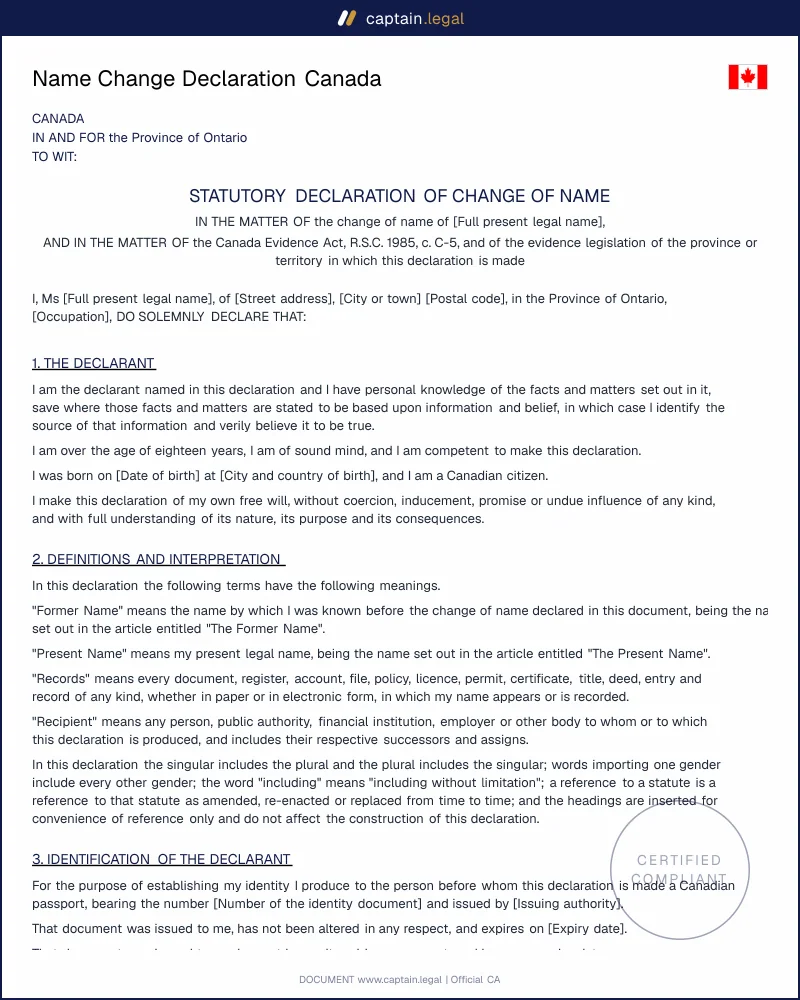
Ontario applications go to the Office of the Registrar General in Thunder Bay, with the declaration bound into the application package. Section 4(1) of the Change of Name Act sets the twelve month ordinary residence bar, and Part 4 requires a guarantor from a prescribed class, physicians and lawyers among them, who confirms that residency independently. Adults also file a police records check. Registered changes appear in The Ontario Gazette unless a non publication request is granted, an option open to transgender applicants and to First Nations, Inuit and Métis applicants.
British Columbia runs a tighter and more private process through the Vital Statistics Agency. Adults nineteen and over qualify after three months of residence, no newspaper publication has been required since the 2002 amendments, and section 8 of the Name Act gives vital statistics registrars the powers of a commissioner for taking affidavits, so a Service BC counter can witness the declaration when you file in person. A criminal record check is mandatory.
Alberta channels applications through authorized registry agents rather than a central office, and fingerprints are required for everyone twelve and older. The declaration must be completed before a notary public or commissioner for oaths, and Vital Statistics rejects electronic signatures and remote commissioning outright on the proof of identity declaration. Notice of the certificate goes into The Alberta Gazette, subject to a court order dispensing with publication where the applicant would be prejudiced or harmed.
Saskatchewan, Manitoba and the Atlantic provinces each run a change of name statute through their vital statistics office. Everywhere, the registrar amends the birth record only if the birth occurred in that province, so someone born in Nova Scotia and living in Alberta applies separately for a replacement birth certificate. Children's travel paperwork has to be redone as well, which is where a fresh travel consent letter for a minor matters at the border.