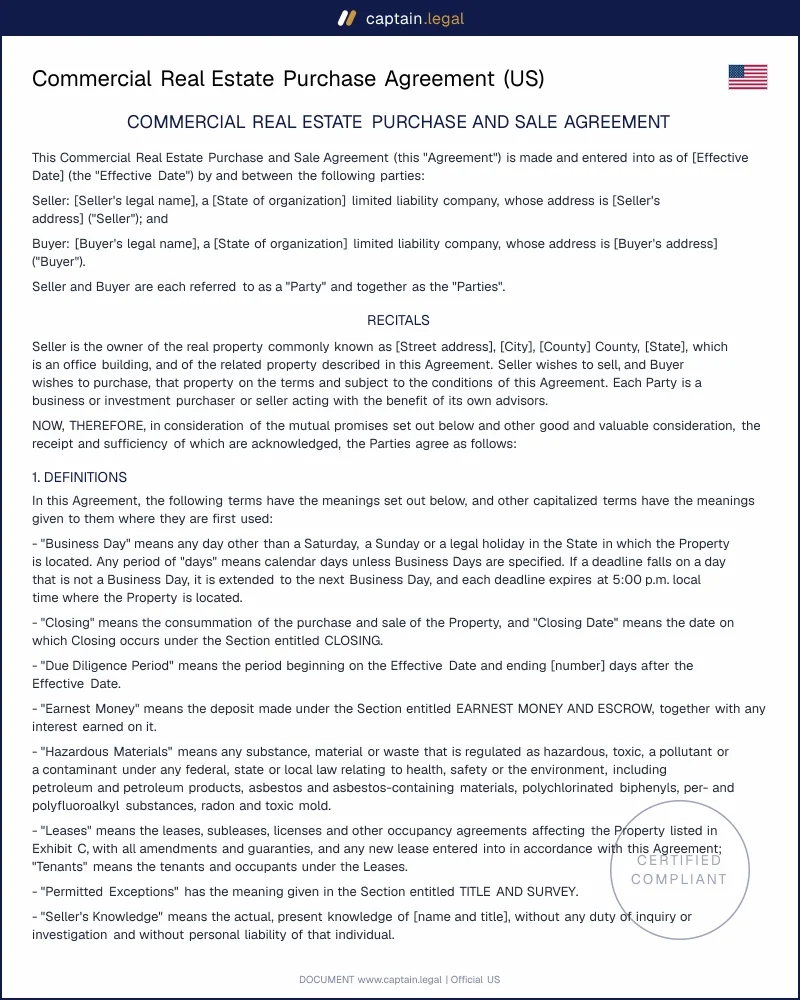
The opening articles define the property in layers: the land in Exhibit A, the improvements, the personal property in Exhibit B, the leases when the building is occupied, and the service contracts the buyer keeps. The price section routes all funds through escrow and requires a telephone check of wiring instructions, because wire fraud at closing is a common loss. The earnest money clause separates the refundable phase from the hard phase, carves out a small independent consideration paid for the buyer's free walk-away right, and offers an optional additional deposit when the due diligence period ends.
Due diligence and title carry most of the weight. The seller must deliver the title policy, survey, reports, permits and tax bills it holds and, for an occupied building, the leases, rent roll and operating statements within a deadline you choose. The buyer orders a title commitment and, if it wants one, an ALTA/NSPS survey, objects within a set number of days, and can terminate if the seller declines to cure; mortgages and other monetary liens created by the seller must be paid off at closing regardless. For occupied properties, closing is conditioned on signed estoppel certificates from tenants covering a percentage of the leased area you set, so a missing certificate lets the buyer walk away without putting the seller in default. The agreement attaches a form, and a standalone tenant estoppel certificate template is also available when a lender asks for its own version.
The risk allocation is where commercial practice shows. The seller gives limited representations that survive closing for a number of months you choose, with a claims threshold and a cap expressed as a percentage of the price, and everything else is sold as is. If the buyer defaults, the seller keeps the deposit as liquidated damages as its sole remedy, apart from the buyer's inspection indemnity; if the seller defaults, the buyer can recover its costs up to a cap or sue for specific performance within 60 days. Prorations cover taxes, utilities, rents and the year-end reconciliation of common area maintenance charges, and casualty, condemnation, FIRPTA, brokers and the optional 1031 cooperation clause close the contract.

 US law 2026