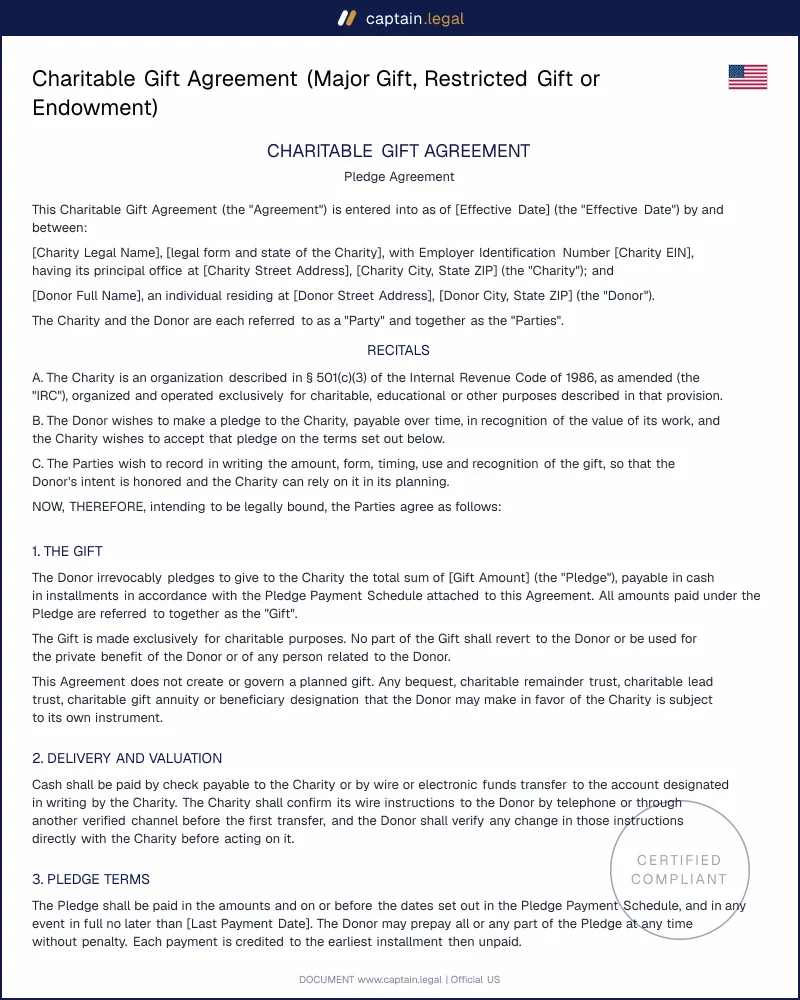
The donor can be one person, two individuals such as spouses who sign jointly and severally, a private foundation, or a company or trust acting through an authorized officer or trustee. The gift is either an outright transfer due by a stated date or an irrevocable pledge paid under an attached Pledge Payment Schedule, in cash, in publicly traded securities credited at their market value on receipt, or in other property that passes only by a separate deed, assignment or bill of sale. The pledge article adds a sixty-day cure period after notice of a missed installment, the donor's choice between a balance binding on the estate or cancelled at death, and a clause on payments routed through a donor-advised fund that follows IRS Notice 2017-73.
Money that arrives then follows the use article. An unrestricted gift goes to the charity's general purposes. A restricted gift is spent only on the Designated Purpose, and an endowment is held permanently under UPMIFA with one of two spending rules: prudent spending under UPMIFA, or a hard floor at historic dollar value. If the purpose later becomes impossible or unlawful, the change in circumstances clause requires sixty days of consultation and asks for the donor's written consent; failing agreement, the board may move the gift to the closest charitable purpose, with court or attorney general involvement where the law requires it.
Donors choose public listing, anonymity with legal disclosure carved out, or naming rights for the useful life of the space or for a fixed term, with a morality clause that lets the board remove a name after written notice and at least thirty days for the donor to respond. Restricted and endowed gifts get a written report within one hundred twenty days after each fiscal year, and the tax article delivers the acknowledgment without promising any deduction.

 US law 2026