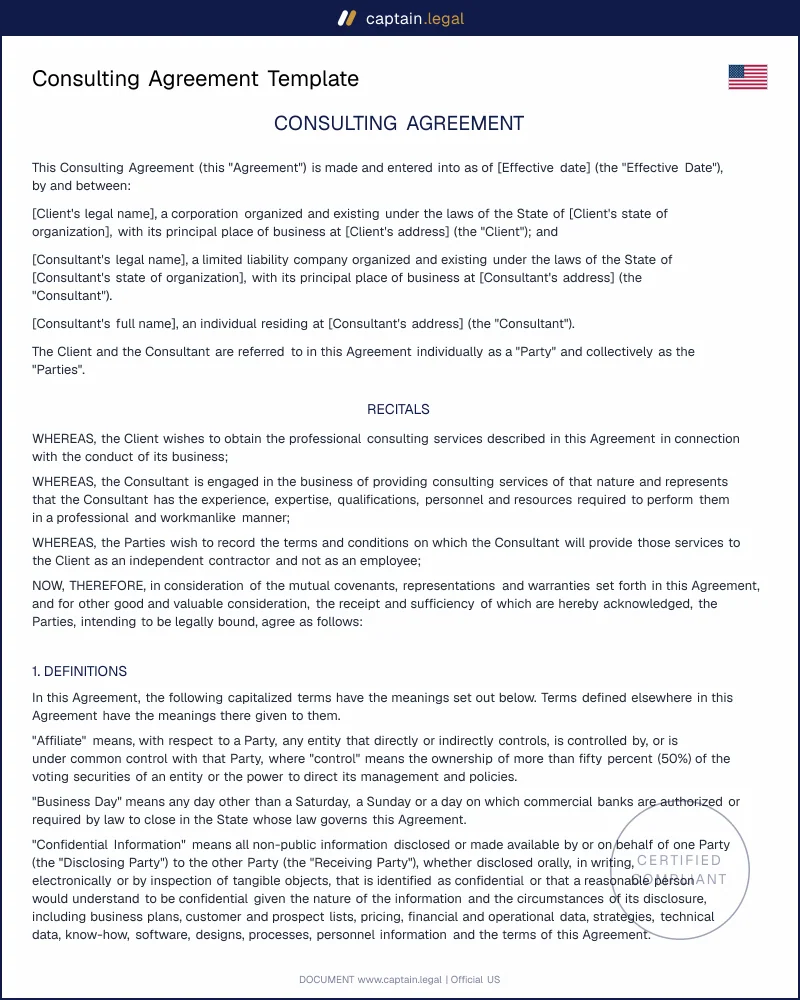
California applies the ABC test codified at Labor Code §2775, the strictest classification standard in the country. Most consulting engagements clear it through the business to business exemption at §2776, but that exemption is conditional, and one condition is a written contract stating the payment amount or rate and the due date. A verbal retainer fails on its face. Licensed lawyers, architects, engineers and accountants fall under §2783 and are judged by the older Borello standard. Do not carry a non-compete into a California engagement: §16600 of the Business and Professions Code voids it, and §16600.5 reaches agreements signed elsewhere.
New York added article 44-A to the General Business Law through the Freelance Isn't Free Act. A client engaging a one-person consultant, incorporated or not, above the statutory value threshold must provide a written contract listing the services, the rate and the payment date, and keep it for six years. Payment falls due on the contract date or, if the contract is silent, within thirty days of completion. Multi-person firms sit outside the statute, which is why the consultant's structure belongs in the recitals.
Texas enforces restrictive covenants under Tex. Bus. & Com. Code §15.50, which requires the covenant to be ancillary to an otherwise enforceable agreement and reasonably limited in time, geography and scope of activity. Confidential information supplied during the engagement is the usual consideration that satisfies the ancillary test, and Texas courts reform overbroad covenants under §15.51(c) rather than striking them.
Florida takes the opposite posture from California. Fla. Stat. §542.335 presumes reasonable a restraint of six months or less against a former contractor and requires a pleaded legitimate business interest, while a separate newer regime gives high earning covered contractors a route to longer restraints. Florida withholds no state income tax on consulting fees, so the whole reporting burden sits on the client's Form 1099-NEC obligations.