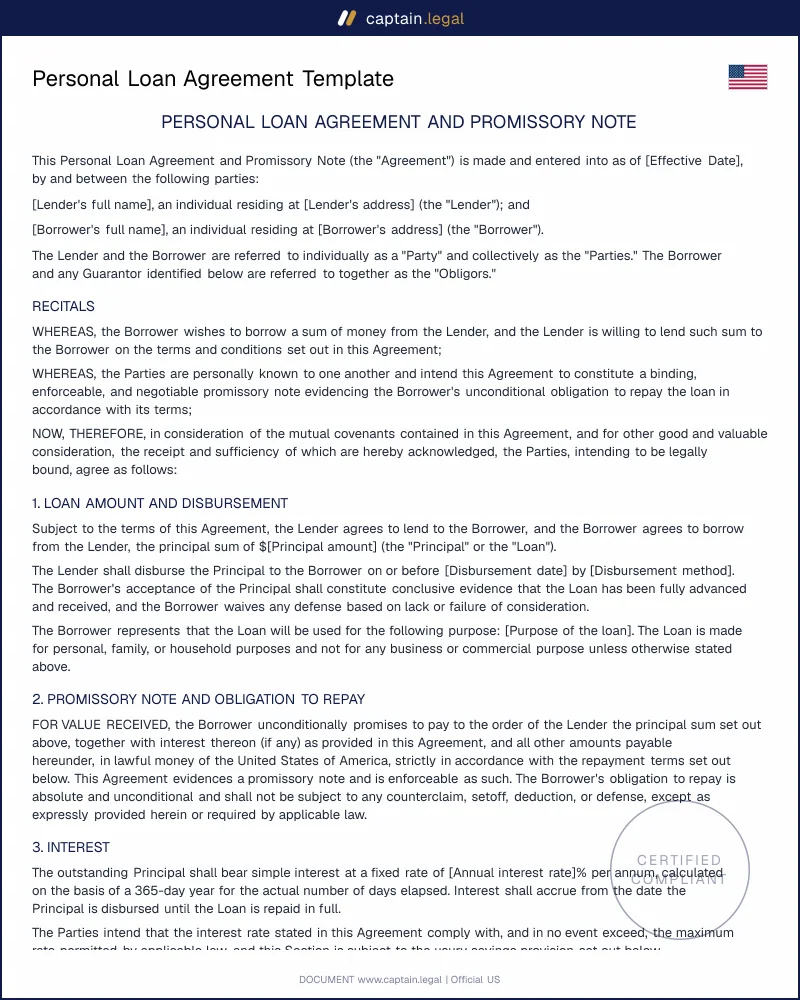
California codifies its usury rule in Article XV of the state Constitution, capping most non-exempt personal loans at 10% per year. The enforcement is unforgiving: a lender who charges above the cap can lose all interest, and willful violation can expose the lender to loan-sharking liability. California courts hold the lender responsible even when the borrower requested the rate and drafted the note, so the modest-rate rule is not optional here. A written agreement documenting a below-cap rate is the clean way to stay safe.
Texas regulates interest through its Finance Code, with a general usury ceiling of 10% for most private loans absent a specific higher authorization. The state's penalties for usurious interest are among the stiffest in the country, and the statute of limitations on a written contract runs four years from the date of default or last payment. A lender relying on an old, undocumented advance can find the claim time-barred before ever filing.
Florida sets its civil usury limit at 18% for loans of $500,000 or less under Chapter 687 of the Florida Statutes, with a higher criminal-usury threshold above 25%. Interest charged over the civil cap is generally forfeited, and the borrower may recover penalties. Florida's five-year limitation period on written contracts gives lenders a longer collection window than many states, but the clock still runs from default.
New York distinguishes sharply between civil and criminal usury, capping civil interest at 16% and criminal usury at 25% under its General Obligations Law and Penal Law. Loans that cross the civil line can be rendered void, meaning the lender may lose both interest and principal, a harsher consequence than most states impose. For any New York loan between individuals, keeping the rate well under 16% is essential. A properly drafted power of attorney is sometimes paired with a loan when one party manages the other's finances.