
The download costs nothing. Working out whether you can trust it is another matter.
When we started building Captain.legal, we assumed the hard part would be drafting the documents. It wasn't. The hard part was working out which questions had to be asked before any of those documents could be useful.
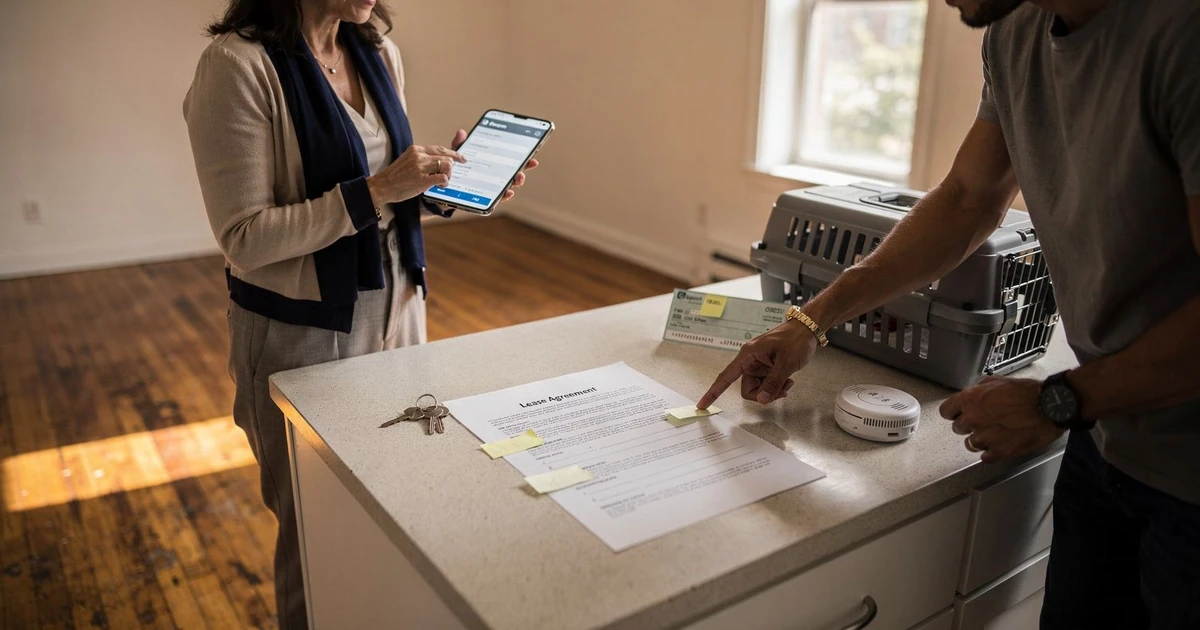
Take a lease. On the surface, it is a fairly ordinary agreement: a landlord, a tenant, a property, some rent and a couple of signatures. Then the questions start.
Which state is the property in? How long will the tenant stay? Is there a security deposit? Are pets allowed? Who handles repairs? What happens if someone wants to leave early?
Those details are not administrative clutter. They shape the agreement. Yet a blank template cannot stop halfway through and ask, "Hang on, which state are we talking about?" It simply sits on the screen looking finished.
That polished appearance is what makes free legal templates so easy to overestimate.
Free is useful. It just isn't the whole answer
There is nothing wrong with starting from a free document. We all use free resources when we are trying to understand an unfamiliar subject or get something done quickly.
The problem is that the word "free" often does two jobs. It describes the price, but it also creates a vague sense that the document is safe to use. Those are separate questions.
A template might have been written for another state. It might be several years old. It might include a clause that does not apply to the deal, or leave out one that does. Most of this is difficult to spot if you are not already familiar with the document.
A residential lease agreement is a good example. Security deposit rules, required disclosures and notice periods can change from one state to another. Replacing the address and monthly rent in a generic file does not deal with those differences.
The same thing happens with a non-disclosure agreement. People often download one because a meeting is approaching and somebody has said, "We should probably sign an NDA first." They find a document that sounds suitably formal, change the party names and move on.
But the useful questions come before the legal prose. Is the NDA mutual or one-way? What information needs protection? Why is it being disclosed? How long should confidentiality last? What information should be excluded?
If the template never asks, the user has to know enough to ask alone.
The file is only the visible part
This changed how we thought about Captain.legal.
We did not want to build a shelf of files with a search box in front of it. A large library can still leave someone staring at two similar document names, wondering which one applies.
So the work moved upstream. Before generating anything, the service has to identify the document and collect the facts that affect it. Some answers lead to another question. Others remove a section that is no longer relevant. The document takes shape as the situation becomes clearer.
You can see why that matters across the US real estate document library. A notice to vacate, a lease renewal and an early termination agreement may all concern the same tenancy, but they do very different jobs. Giving someone the wrong one faster is not an improvement.
It matters in other areas too. Employment documents depend on the role, the working relationship and state law. Business agreements need to reflect what the parties are actually exchanging, who owns the resulting work and how either side can end the arrangement.
None of this requires pages of explanation from the user. It does require the service to ask the right questions in the right order.
What we chose to do differently
Captain.legal starts with an interview rather than a download button.
You choose the document you need and answer questions about your situation. The available options change when an earlier answer makes something relevant. You can then review a preview before deciding whether to buy the final Word and PDF files.
We also show the price of each US document openly. Completing a long form only to discover a hidden fee at the last screen is another version of the same problem: the user is missing information needed to make a decision.
Software cannot promise that a routine legal document will never lead to a disagreement. It should not pretend to replace a lawyer when a matter is complex, disputed or unusually important. There are situations where individual legal advice is exactly what you need.
But there is a wide space between hiring a lawyer for every piece of paperwork and downloading an anonymous file from a search result. That is the space we are working in.
The next time you find a free legal template, do not judge it by how complete it looks. Check where it was written, which jurisdiction it covers, what assumptions it makes and whether you understand the choices already made on your behalf.
The download is the easy part. The questions are the document.
Browse Captain.legal's US legal documents.
Captain.legal provides legal document templates and guided document-generation tools. It does not provide individual legal advice.
Written by Damien DELMOTTE, founder of Captain.legal.