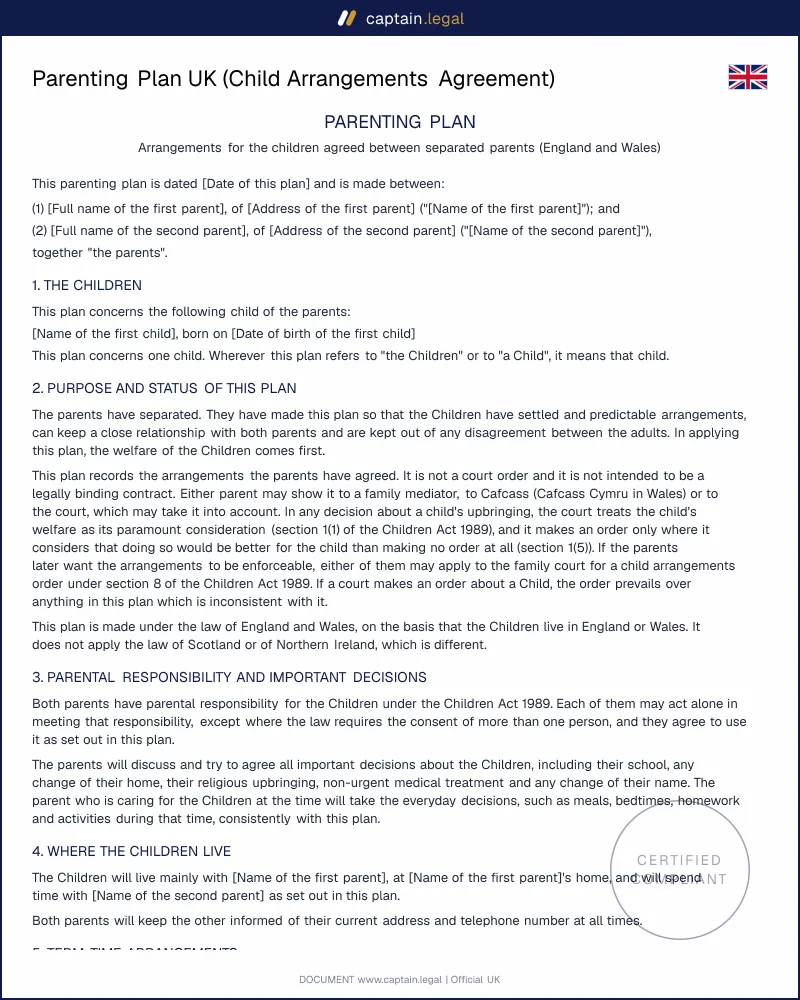
The opening clauses name both parents, with the short names used throughout, and list each child with a date of birth. A status clause then states that the plan is not a court order, that a court order made later prevails over it, and that the welfare of the children comes first. The parental responsibility clause adapts to your answer, so a plan where only one parent has it explains how the other can acquire it and, where the children live with that parent, what the parent may do meanwhile under section 3(5).
The core of the plan covers the children's main home or shared care, the term-time pattern (several standard patterns, including a 2-2-5-5 rotation, or your own wording), handovers and who drives, school holidays, Christmas and special days such as birthdays and Mother's Day or Father's Day. A priority rule makes the Christmas and special-day arrangements override the ordinary pattern, which is where most real disputes begin. Travel abroad requires the other parent's written consent and a notice period you choose; the plan also says who keeps the passports, with a fallback if you cannot agree. If the children travel with someone else, pair the plan with a consent letter for a child travelling abroad.
The last part deals with education, health, religion, house rules, communication, new partners, moving home or changing a surname, child maintenance (through the Child Maintenance Service, a family-based arrangement or separately), the children's wishes and feelings, safety, a review date and a disagreements clause that puts mediation first.

 England & Wales law 2026