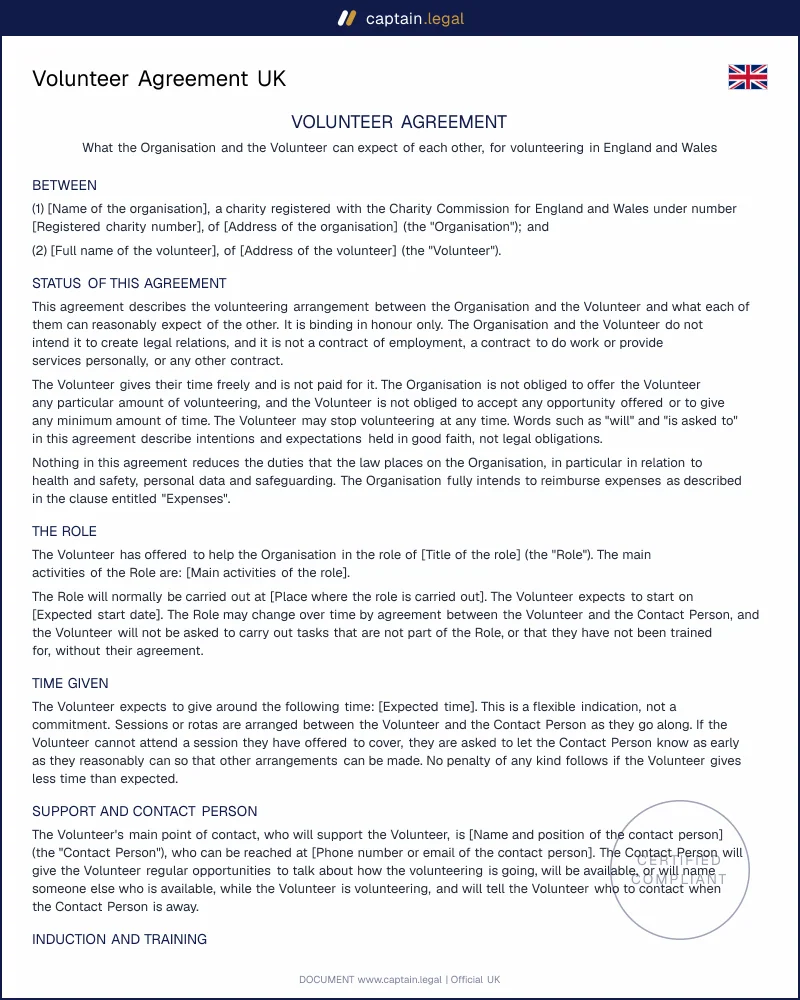
The opening clauses identify the organisation, with its charity number where it is registered, and the volunteer, then deal with status: binding in honour only, not a contract of employment or any other contract, no obligation to offer or accept any amount of volunteering, and the freedom to stop at any time. The role clause describes activities in plain language, gives the place and expected start date, and records the time the volunteer expects to give as a flexible indication, with an express statement that no penalty follows if they give less.
The support clauses name the contact person, describe the induction and confirm that training is never tied to a commitment or repayable. The expenses clause lists what the organisation will reimburse, explains how to claim with receipts, and rules out fees, flat-rate allowances and rewards beyond refreshments and training for the role. A driving clause appears only when the volunteer uses their own vehicle. The confidentiality and data clauses follow the logic of a UK GDPR privacy policy template: what is collected, why, for how long and how to complain.
The safeguarding clause changes with the check you select, from a simple record that none is needed to an enhanced check with the barring offence and the duty to refer. The insurance clause either confirms cover checked with your insurer or tells the volunteer plainly that there is none. Closing clauses cover conduct and gifts, photographs, an informal problem-solving route that is expressly not a disciplinary procedure, ending the arrangement and review. Boards that want matching paperwork for trustees often add a conflict of interest policy and register for charities.

 England & Wales law 2026