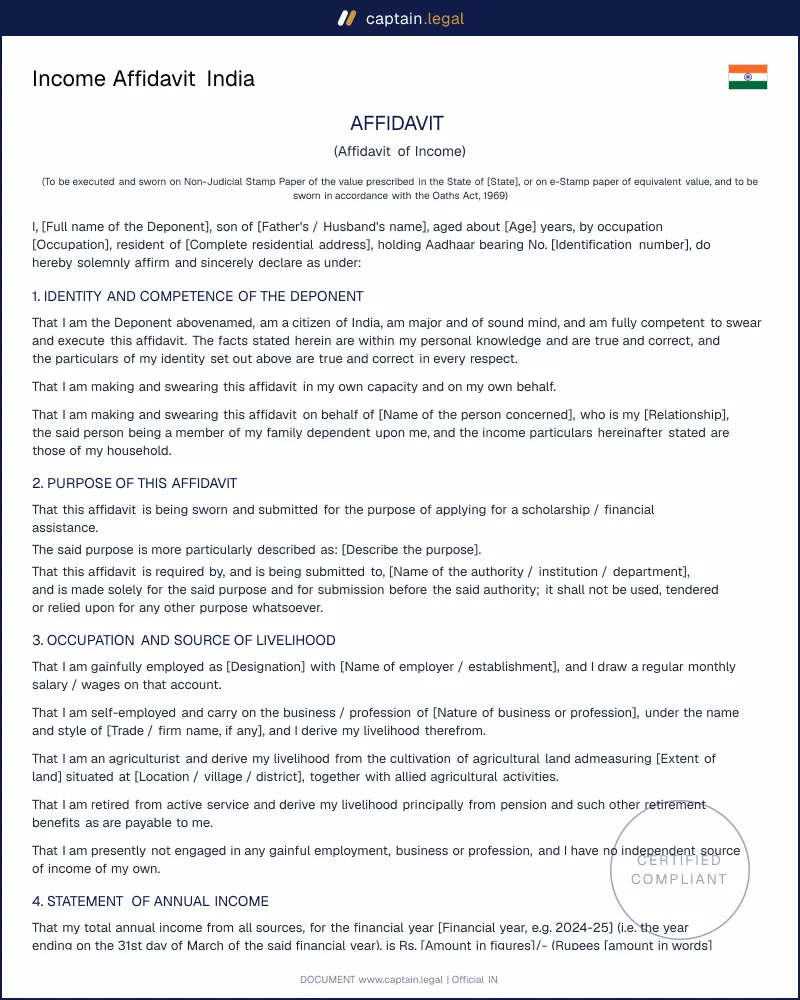
An income affidavit is a self-declaration of earnings made under oath. The person making it, called the deponent, states their name, parentage, age, address and occupation, then declares a specific figure as total annual income from all sources for a named financial year, usually broken down between salary, business, agriculture, rent and any other head. The document closes with a verification clause confirming the contents are true to the deponent's knowledge, and it is signed before a Notary Public or Oath Commissioner who administers the oath and affixes a seal.
People often confuse this with the Income and Asset Certificate issued by revenue officials such as a Tehsildar or Sub-Divisional Magistrate. The two are not interchangeable. The certificate is an official assessment by a government authority and is mandatory for most central and state reservation schemes, including the 8 lakh threshold for EWS benefits. The affidavit is a private sworn statement: faster, self-certified, and accepted by many private colleges, banks and consular offices, but it does not replace a Tehsildar certificate where a scheme specifically demands one. Always check the receiving authority's exact requirement before relying on an affidavit alone. Our self-declaration affidavits for address, age and official records follow the same execution discipline, which is what gives a sworn statement its standing.