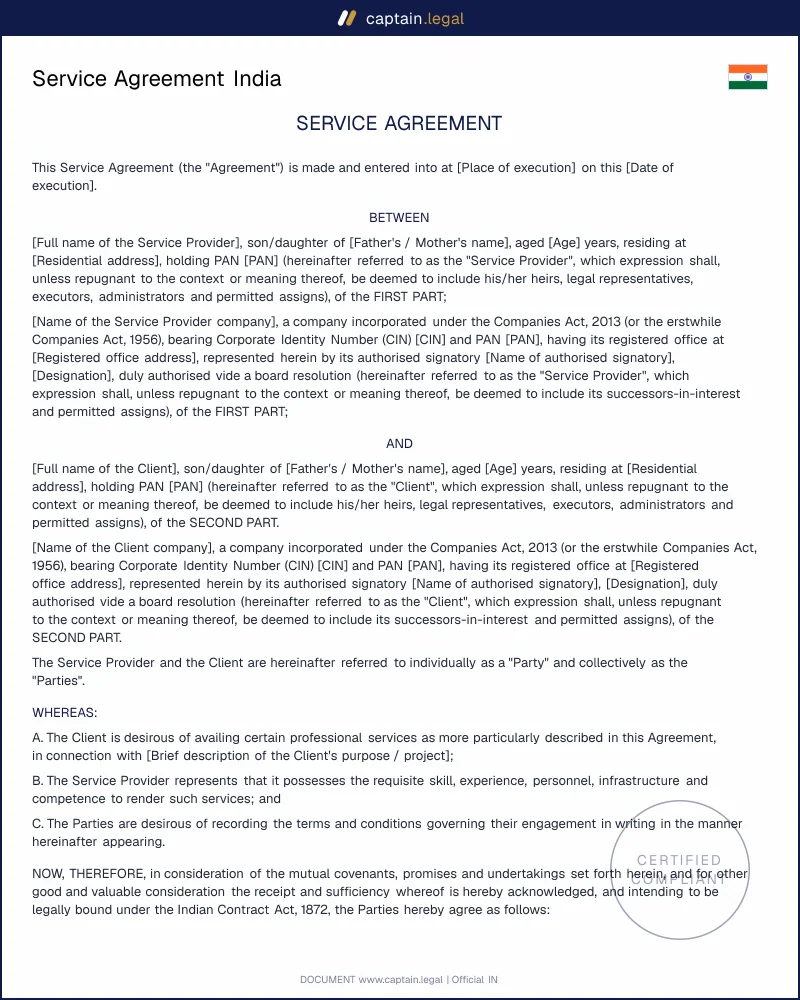
Stamp duty is the dimension where State law genuinely diverges, so the State of execution matters for a service agreement. In Maharashtra, agreements are stamped under the Maharashtra Stamp Act, 1958, and a service or consultancy agreement typically attracts a fixed or value-linked duty under the residuary article; Mumbai's commercial volume means under-stamping is routinely caught at the evidence stage. In Karnataka, the Karnataka Stamp Act, 1957 governs, and Bengaluru's technology sector relies heavily on master service agreements for IT services, where the IP-assignment and confidentiality clauses carry disproportionate weight.
In Delhi, the Indian Stamp Act, 1899 as applied to the National Capital Territory sets the duty, and the concentration of consultancies and agencies makes the distinction between a contractor agreement and a disguised employment contract a live compliance issue. In Tamil Nadu, the State stamp schedule applies and Chennai's manufacturing and back-office base generates a steady stream of vendor and outsourcing agreements where milestone-linked payment clauses are scrutinised closely. Telangana follows its own adaptation of the stamp legislation, and Hyderabad's pharma and IT clusters lean on cross-border service agreements where governing-law and arbitration clauses are non-negotiable.
The practical takeaway across States is consistent. The Contract Act is central legislation and applies uniformly, so the validity of your service agreement does not change between Mumbai and Chennai. What changes is the stamp duty payable and the registering or adjudicating authority, which is why the agreement should be stamped in the State of execution and on the correct value. If your engagement crosses into incorporation or vendor onboarding for a company, the business and incorporation document templates cover the corporate-side paperwork that often sits alongside a service agreement.