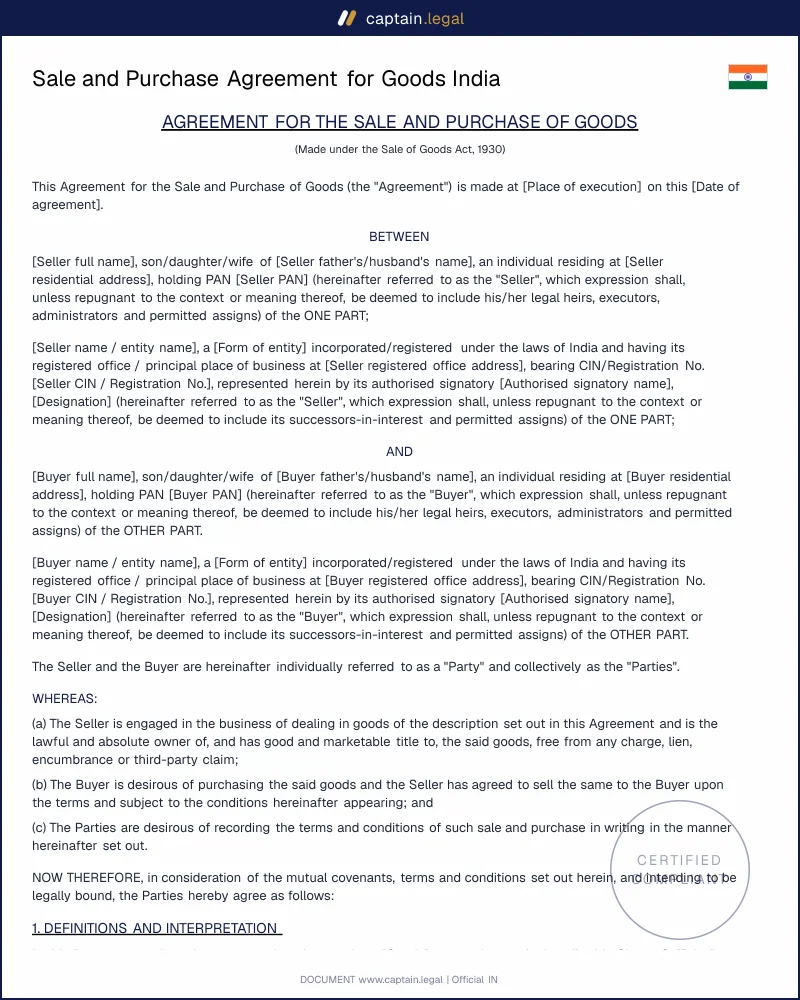
The governing statute is the Sale of Goods Act, 1930, which came into force on 1 July 1930 and applies across India. It was carved out of the Indian Contract Act, 1872, when Sections 76 to 123 of that Act were repealed and re-enacted as a standalone code. The two laws still work together: under Section 3 of the Sale of Goods Act, the general principles of contract, free consent, lawful consideration, capacity and lawful object, continue to apply except where the sale statute says otherwise. So a contract that fails the Section 10 test of a valid contract under the Indian Contract Act, 1872 will not be saved merely because it concerns goods.
The heart of the Act sits in its implied terms. Sections 14 to 17 read a set of conditions and warranties into every contract of sale unless the parties expressly exclude them. Section 14 implies a condition that the seller has the right to sell, so a buyer who receives goods the seller never owned can reject them and recover the price. Section 15 implies that goods sold by description match that description, and Section 16 implies merchantable quality and, in defined cases, fitness for the buyer's stated purpose. Ownership and risk are governed by Sections 18 to 25, which fix the moment property passes from seller to buyer. When the buyer defaults, Sections 45 to 54 arm the unpaid seller with a lien, a right of stoppage in transit and a right of resale, while Sections 55 to 61 set out the suits for breach available to both sides. For the full statutory text and the official chapter structure, the authoritative source is the India Code repository of the Sale of Goods Act, 1930 maintained by the Government of India. One point catches sellers off guard: an unstamped or under-stamped agreement can be refused as evidence in court until the deficit duty and penalty are paid, because stamp duty under the Indian Stamp Act, 1899 and the State stamp laws applies to many commercial instruments.