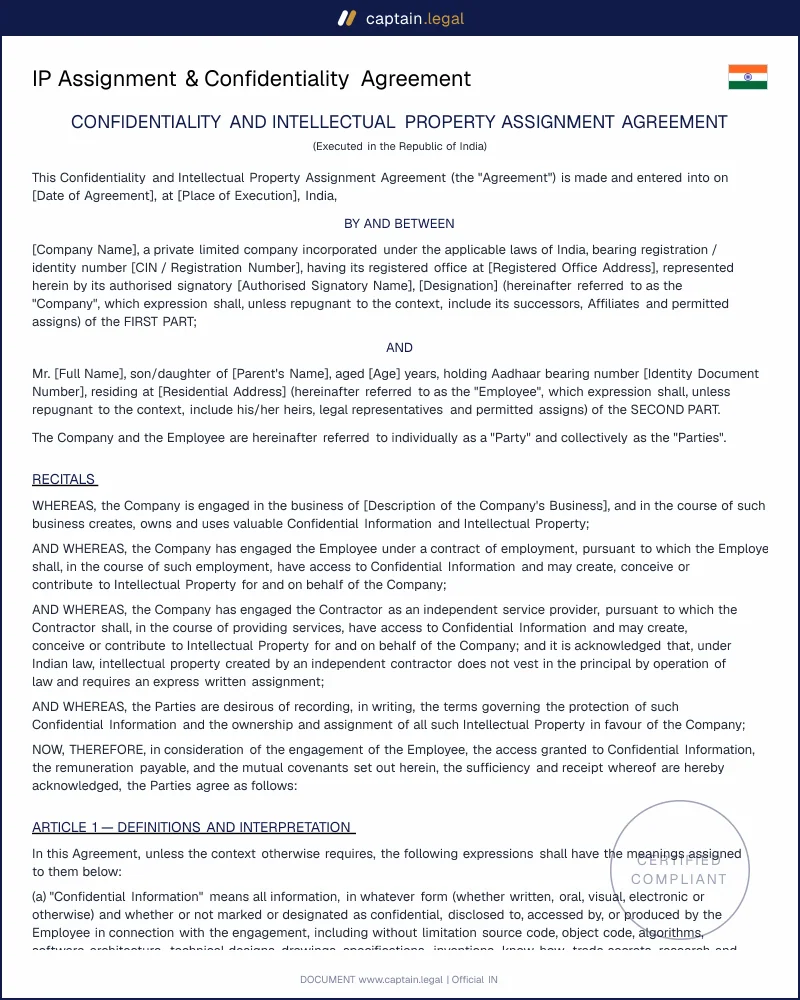
Indian IP ownership runs on default rules that surprise most founders, and the agreement exists precisely to override them. For copyright, Section 17 of the Copyright Act, 1957 makes the author the first owner of a work. The single important exception is the contract of service: where an employee creates a work in the course of employment, the employer is the first owner unless there is an agreement to the contrary. That exception does not extend to consultants, freelancers or agencies, who work under a contract for service, not a contract of service. Without a written assignment, the independent contractor keeps the copyright, and the company that paid the invoice holds only a limited right to use the deliverable, not to own it.
Assignment itself is governed by Sections 18 and 19 of the Copyright Act. An assignment is valid only if it is in writing and signed by the assignor, and it must identify the work, specify the rights assigned, and state the duration and territorial extent. A vague "all IP belongs to the company" line risks being read down. The agreement also addresses Section 57, the author's special moral rights of attribution and integrity, which cannot be assigned and are instead waived to the extent the law permits.
Patents follow a different statute. Under the Patents Act, 1970, the inventor is the first owner, so the right to apply for and own a patent must be expressly assigned, with a covenant to sign further documents at the patent office. The confidentiality terms draw on the Indian Contract Act, 1872, and you should note that Section 27 voids any clause restraining a lawful trade, which is why a post-engagement non-compete is drafted narrowly here while confidentiality and assignment, being protections of property rather than restraints, remain enforceable. For the statutory text on ownership and assignment, the Indian Copyright Office guidance on first ownership and mode of assignment is the authoritative reference.