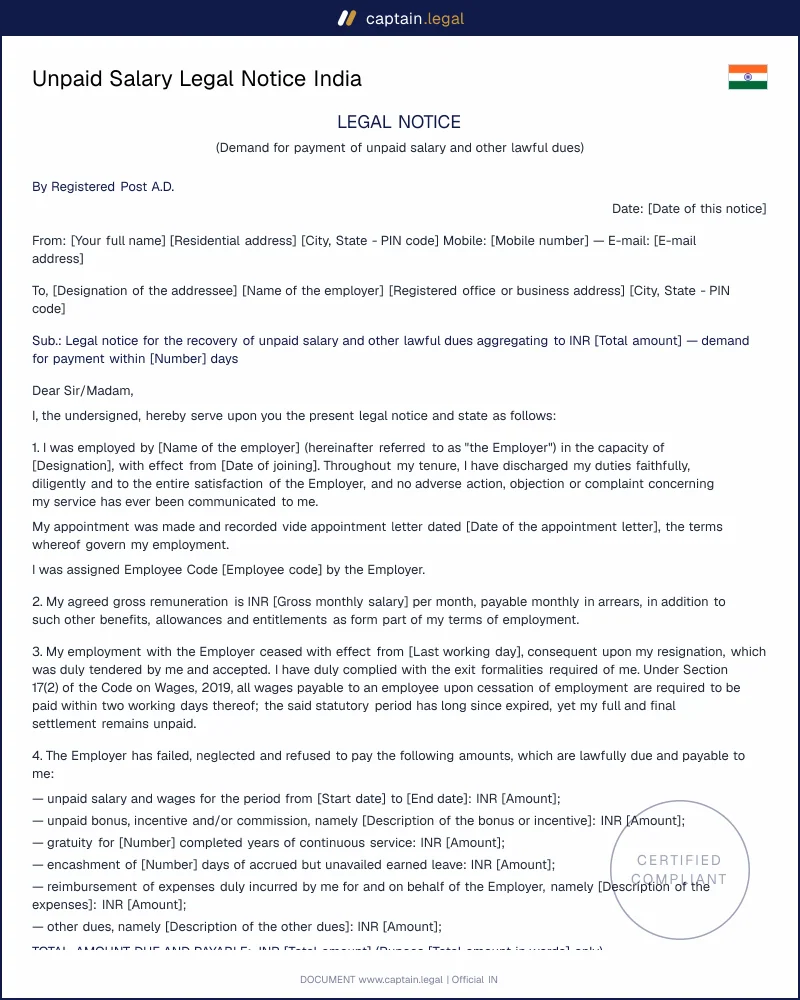
Maharashtra processes the largest volume of wage claims in the country, and the Maharashtra Shops and Establishments (Regulation of Employment and Conditions of Service) Act, 2017 continues to govern leave encashment and service conditions alongside the central Code. Claims in Mumbai and Pune go before authorities sitting in the Kamgar Bhavan offices, and the state labour department accepts complaints through its online portal. Practitioners here advise serving the notice on both the corporate office and the registered office when they differ, since Maharashtra authorities are strict about territorial jurisdiction.
Delhi retains the Delhi Shops and Establishments Act, 1954 for establishments in the capital, and its labour department runs one of the more responsive e-filing systems for wage complaints. The concentration of head offices in the NCR means Delhi notices often reach the decision makers directly, which improves pre-litigation settlement rates. Employees in Gurugram and Noida should note that their claims fall under Haryana and Uttar Pradesh authorities respectively, not Delhi, whatever the company's letterhead suggests.
Karnataka is dominated by technology sector disputes, where a large share of claimants are supervisory or managerial staff falling outside the worker definition in the Industrial Relations Code, 2020. For them the wage claim under Section 45 and the civil suit remain the available routes, and the three year limitation under the Limitation Act, 1963 applies to the suit. The Karnataka Shops and Commercial Establishments Act, 1961 still supplies the leave and service condition baseline.
Tamil Nadu applies the Tamil Nadu Shops and Establishments Act, 1947 and maintains an active inspectorate in Chennai and Coimbatore. The state's authorities take a documented notice seriously, and a claim supported by acknowledgement due cards moves measurably faster. Manufacturing employees here frequently combine wage claims with gratuity applications, which the template accommodates in a single consolidated demand.