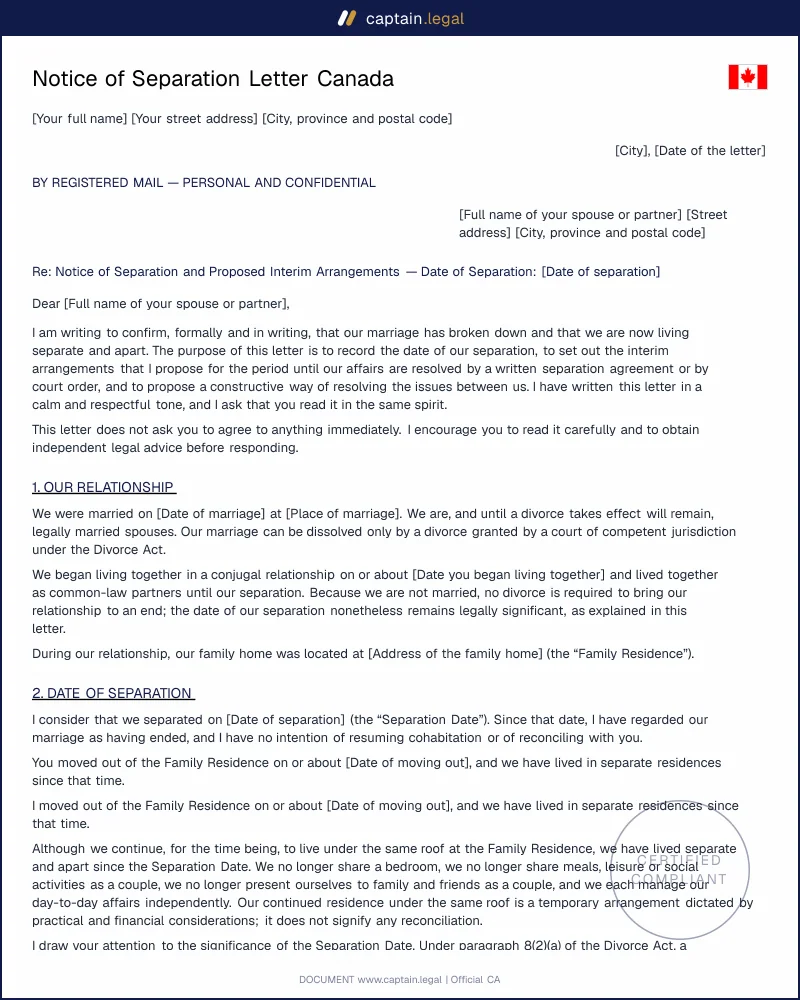
Divorce is a federal matter. Section 8(2)(a) of the Divorce Act, RSC 1985, c 3 (2nd Supp) establishes a breakdown of the marriage where the spouses have lived separate and apart for at least one year immediately preceding the determination of the proceeding. Section 8(3)(a) deems them separate for any period in which they lived apart and either one had that intention, which is why a dated written statement of intention is so useful. Under section 8(3)(b)(ii), resuming cohabitation for a period, or periods totalling, not more than 90 days does not interrupt the separation. Once reconciliation time exceeds 90 days in total, the one-year period starts again from the next separation. The full wording is available in the federal text of section 8 of the Divorce Act on the Justice Laws website.
Everything else is largely provincial. Property division is governed by statutes such as Ontario's Family Law Act, RSO 1990, c F.3, British Columbia's Family Law Act, SBC 2011, c 25 and Alberta's Family Property Act, each of which attaches key consequences to the separation date. Child support is calculated under the Federal Child Support Guidelines, SOR/97-175 in divorce proceedings, and under provincial guidelines that largely mirror them, such as Ontario's O Reg 391/97, when parents rely on provincial law. Since the 2021 amendments, the Divorce Act speaks of parenting time and decision-making responsibility, and section 16 makes the best interests of the child the only consideration.
Spouses can also separate while still sharing a home. The leading Ontario decision, Oswell v Oswell (1990), 74 OR (2d) 15 (HCJ), aff'd (1992), 12 OR (3d) 95 (CA), looks at separate bedrooms, shared meals, joint social life, communication and the handling of money. Quebec sits outside this template, since property consequences there flow from the Civil Code of Québec and its family patrimony rules.