
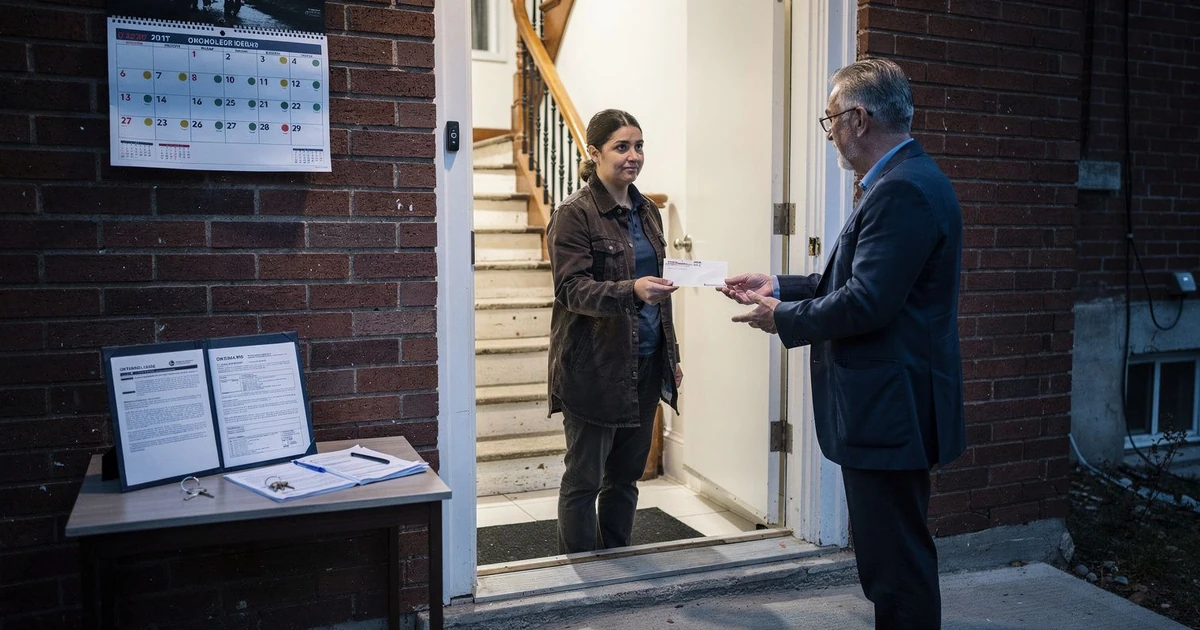
Ontario has set its rent increase guideline at 1.9% for 2027, down from 2.1% in 2026. The figure governs every increase that takes effect between January 1 and December 31, 2027, and it marks the most a landlord can add to a sitting tenant's rent in a covered unit without an order from the Landlord and Tenant Board. For owners of older rental stock, the Ontario rent increase guideline sets next year's revenue, but whether the increase holds up depends on what the landlord has put in writing: the lease recording the lawful rent, the notice that triggers the increase, and the terms proving when the cap does not apply.
What the Ontario rent increase guideline caps in 2027
The guideline is a percentage the province fixes once a year under the Residential Tenancies Act, 2006. It applies to the lawful rent, meaning the rent the tenant is legally required to pay. On a lawful rent of $1,000, the 2027 cap allows an increase of $19, for a new monthly rent of $1,019. The landlord can raise less or nothing at all, but cannot exceed the percentage for a sitting tenant without a qualifying agreement or a Board order.
The guideline that applies is the one in force when the increase takes effect, not when the notice is served. An N1 handed over in October 2026 for a new rent starting January 1, 2027 must use 1.9%, even though 2.1% was still the rate on the day of service. A new tenancy, by contrast, is not capped: the landlord sets the opening rent when a unit turns over.
Legal framework
Under section 120 of the Residential Tenancies Act, 2006, a landlord may not raise a tenant's rent during the tenancy by more than the guideline, except through an agreement under section 121 or section 123 or a Board order under section 126 or section 127. Under section 120(2), the guideline equals the yearly change in Ontario's Consumer Price Index, averaged over the twelve months ending in May of the preceding year, and the same subsection caps it at 2.5%, however high inflation runs. Section 120(3) requires the Minister to publish the figure by August 31 of the preceding year.
Procedure rests on three provisions. Section 116 requires at least 90 days' written notice in a form approved by the Board and declares an increase void when that notice is not given. Section 119 allows one increase every twelve months, counted from the last increase or the start of the tenancy. Section 6.1, added by the Restoring Trust, Transparency and Accountability Act, 2018 and in force since December 6, 2018, lifts the percentage cap for units first occupied for residential purposes after November 15, 2018, while leaving the notice and frequency rules intact.
The lease is regulated too. Since April 30, 2018, most residential tenancies must be documented on the government's standard form of lease, prescribed under section 12.1 and Ontario Regulation 9/18. Section 4 voids any term that contracts out of the Act, so a clause promising a 3% yearly increase on a rent-controlled unit has no effect. The Ministry of Municipal Affairs and Housing explains the calculation and the exemptions on its official Ontario page on residential rent increases and the guideline.
Which units the 1.9% cap does not cover
The section 6.1 exemption attaches to the unit, not to the tenant. It covers units in buildings, mobile home parks and land lease communities first occupied for residential purposes after November 15, 2018, units in additions first occupied after that date, and certain new self-contained units created in a house after the cut-off, such as a basement apartment, where the house held no more than two residential units at any time up to November 15, 2018. A unit that housed anyone before that date stays rent-controlled, however thoroughly it has been renovated since.
When a tenant disputes the exemption, the burden of proof sits with the landlord. Ontario's guidance asks landlords of exempt units to state the exemption as an additional term under section 15 of the standard lease and to keep records establishing the first-occupancy or completion date, such as building or occupancy permits and new home warranty documents. Landlords who win these hearings usually wrote the exemption into the lease on day one.
The exemption removes only the cap. The landlord still gives 90 days' written notice and waits twelve months between increases, but the Board's instructions point exempt units to Form N2, the Notice of Rent Increase (Unit Partially Exempt), rather than Form N1. The section 15 term and the permit file are what back that N2 up.
Serving the N1: timing, form and proof of service
The 90 days run from the date the notice is given, and a mailed notice counts as given only on the fifth day after mailing. Take an increase effective March 1, 2027. A notice handed to the tenant must be given by December 1, 2026, and a mailed one posted by November 26, 2026. One day short and the increase is void, not merely delayed, so the landlord restarts with a fresh notice and a new 90-day clock.
Hand delivery, leaving the notice with an adult in the unit, sliding it under the door or through the mail slot, and ordinary mail are all accepted methods. Taping it to the door is not. Email works only where the tenant agreed to it in writing, either in the email consent section of the standard lease or on the Board's consent form. Whatever the method, complete the Board's Certificate of Service the same day and keep it with a copy of the signed notice.
The twelve-month rule catches landlords who confuse the lease term with the rent cycle. A tenant who moved in on May 1, 2026 can see a first increase on May 1, 2027 at the earliest, on an N1 given by January 31, 2027. Habits formed in another province can mislead here, as our comparison of tenancy notice rules in Ontario, British Columbia and Alberta shows.
Going above 1.9% and the last month's rent deposit
Under section 121, landlord and tenant can sign Form N10 for an increase of up to 3% above the guideline in exchange for a specified capital expenditure or a new service, such as a parking space; the tenant may cancel in writing within five days. Under section 126, the landlord applies to the Board for an above-guideline increase for an extraordinary rise in municipal taxes, eligible capital expenditures or security costs, filed at least 90 days before the first increase. For capital work and security services, the yearly increase is capped at 3% above the guideline and a larger justified amount is spread over up to three years.
The guideline also sets the interest on the last month's rent deposit. Section 106 requires annual interest at the guideline rate in force when it falls due, so interest due during 2027 runs at 1.9%, and the landlord may keep it to top up the deposit. When the rent goes up, the landlord can also ask the tenant to raise the deposit by the same amount. That deposit can never be applied to damage or cleaning, and beyond a refundable key deposit, Ontario permits no other deposit.
How to put the 2027 terms in writing with Captain.Legal
Most rent disputes we review trace back to a lease that never said clearly what the rent covered and whether the guideline applied. The Residential Tenancy Agreement template for Canada settles those points upfront. You start by choosing Ontario as the province, which aligns the deposit with the last month's rent model and the rent-increase wording with the 90-day and twelve-month rules. You then enter every adult occupant, the unit, the monthly rent and what it includes, and the start date that anchors the twelve-month cycle.
For a unit first occupied after November 15, 2018, record the exemption and its evidence in the additional terms, so the wording can go straight into section 15 of the provincial form. For most Ontario tenancies the government's standard lease remains mandatory, and the terms you prepare are carried into it rather than replacing it. The agreement downloads in Word and PDF, and related rental forms sit in our Canadian real estate and rental document collection. The N1, N2 and N10 are Board forms, taken directly from Tribunals Ontario.
Mistakes Ontario landlords make with the rent increase guideline
The classic autumn error is the wrong percentage. A landlord remembers 2.1% and serves N1s for January or February 2027 increases above the 1.9% cap; the excess is not lawful rent, and the tenant can claim a rebate. Close behind comes the counting error: 90 days measured from the mailing date, or an increase timed to a lease renewal eleven months after the last one. Both make the increase void.
Exemption claims fail for lack of paperwork: treating a converted house as post-2018 housing without checking how many units it held before the cut-off ends in a rebate order. Co-owners create their own trap when nobody is in charge of notices: a partnership agreement between co-owners of a rental property should say who signs and serves them, and a manager's mandate should carry the same duty with the yearly N1 calendar. Finally, some landlords lean on section 136, under which rent charged for a year without a challenge is deemed lawful. A tenant who applies within that year still recovers the overcharge.
Frequently asked questions
What is the Ontario rent increase guideline for 2027?
The Ontario rent increase guideline for 2027 is 1.9%, set under section 120 of the Residential Tenancies Act, 2006. It caps a sitting tenant's increase in a rent-controlled unit for any new rent taking effect between January 1 and December 31, 2027, unless the tenant signs an N10 or the Board approves an above-guideline increase. It replaces the 2.1% figure of 2026 and can never exceed 2.5%. Units first occupied after November 15, 2018 are not capped.
My N1 was served in 2026: which percentage applies?
The effective date decides. If the new rent starts on or after January 1, 2027, the increase cannot exceed 1.9%, even when the notice was given in the autumn of 2026 while 2.1% was still in force. A landlord who calculated a January 2027 increase at 2.1% should charge no more than the 1.9% amount, because anything above the guideline is not lawful rent and the tenant can recover it through the Board.
How much notice does a landlord need to give for a rent increase in Ontario?
At least 90 days' written notice under section 116, on the Board's form: N1 for rent-controlled units, N2 for exempt ones, with twelve months since the last increase under section 119. A mailed notice counts as given on the fifth day after mailing. A late notice makes the increase void, and a notice on the wrong form or with missing information can be found invalid too, in which case a new 90-day notice must run before any higher rent is due.
Can a landlord charge any rent to a new tenant in Ontario?
In most cases, yes. When a unit turns over, the landlord sets the opening rent, and under section 113 the lawful rent is the first rent charged. The narrow exception is a Board order freezing increases for serious maintenance problems, which can follow the unit. Since that opening rent carries the longest financial tail, a rental application form for screening new tenants helps you assess income and references within privacy and human rights limits.
Is a tenancy agreement from Captain.Legal legally valid in Ontario?
A signed agreement binds both parties to the extent it complies with the Act, since section 4 voids any contrary term, and most tenancies since April 30, 2018 also require the government's standard form of lease. The Captain.Legal residential lease for Ontario tenancies prepares compliant wording for the rent, deposit and exemption status that you carry into that form. A tenant denied the standard lease can demand it in writing and, after 21 days, withhold one month's rent, kept for good if the lease is still missing 30 days later.
Can I download the agreement in Word or PDF?
Both formats are included. The PDF is ready to print and sign, while the Word file lets you adjust details first, such as a parking schedule or the section 15 wording for a post-2018 unit. File the signed lease, every N1 and each Certificate of Service together, since the Board reviews the whole chain when a tenant disputes an increase.