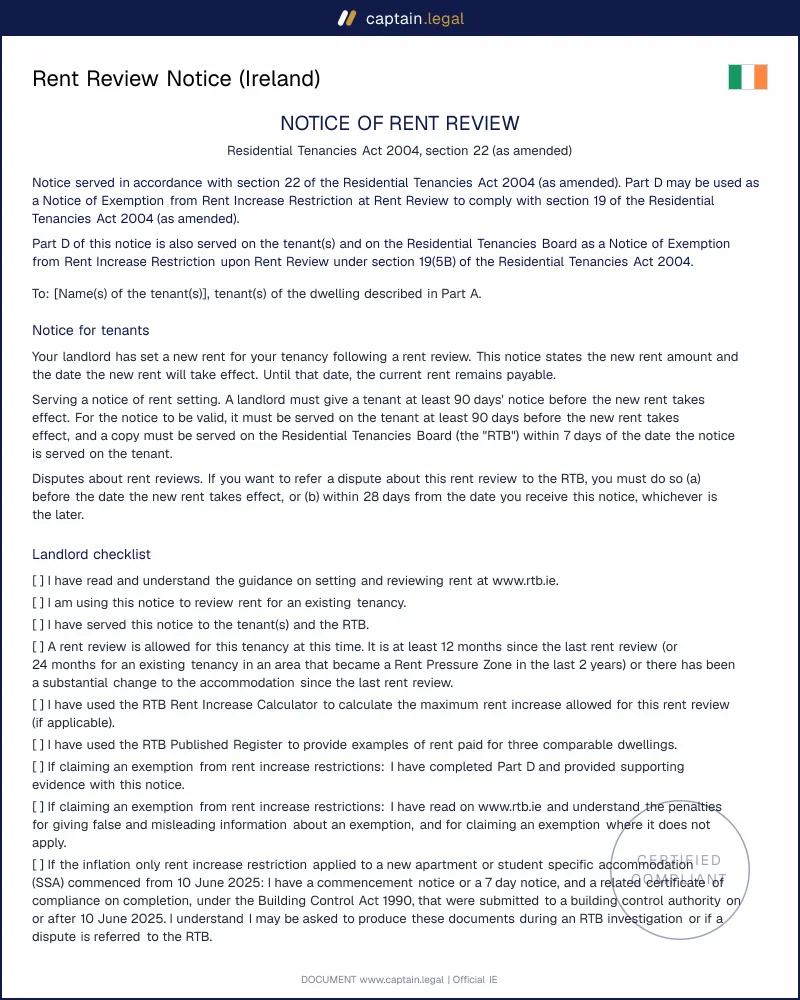
Each part of the prescribed form appears in its original order, so an RTB adjudicator recognises the notice at once. It opens with the statutory heading, an addressee line naming every tenant, and the information for tenants on the 90 day notice, the 7 day RTB copy and the dispute deadline. The landlord checklist from the form follows. Part A records the tenancy type, address, Eircode, RT number, start date, floor area, BER and whether the dwelling is in a new development. Part B sets out the current rent, the date of the last review notice, the new rent, its frequency, the effective date and the rent control rule applied.
Below Part B, a short statement explains how the new rent was calculated, as section 22(2A)(f) and (g) require. For a capped increase it describes the 2 per cent or inflation test and gives the maximum from the RTB calculator; for the inflation-only cap it recites the conditions of section 19(4)(aa); and it explains how the current rent was itself set. Part C gives the market rent opinion with three comparable dwellings from the RTB register.
What Part D says depends on your answers. With no exemption it says so, keeping the item numbering intact. With one, it states the reason (extension of at least 25 per cent, energy improvement, or three qualifying works), describes the works and adds the landlord's declaration that they were not done only to meet minimum standards, while Part E lists the documents. Part F carries the declaration of accuracy, the signatory's name and the signature, followed by service instructions and a record of service.