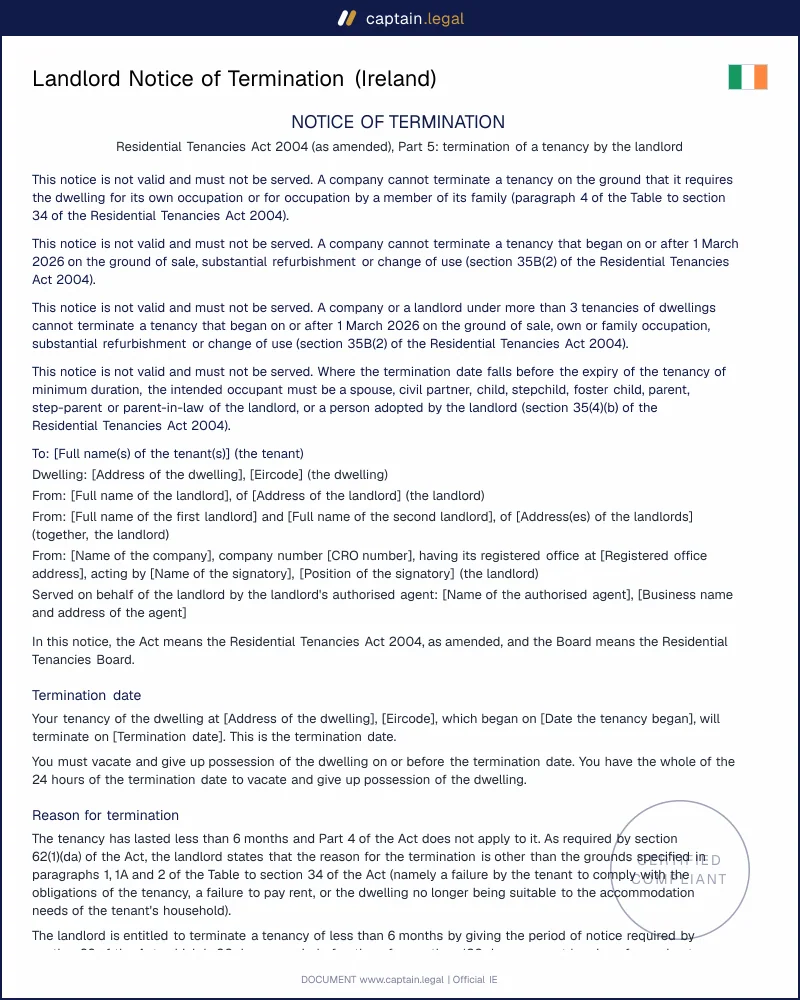
Rent arrears are the classic fault-based trigger. The landlord first serves a written warning on the tenant and on the RTB, waits 28 days from the later receipt, and only then serves a notice giving 28 days. Other breaches, such as refused access for repairs, damage beyond normal wear and tear or an unauthorised sublet, call for a written warning with a reasonable time to put things right. Serious anti-social behaviour, such as violence, threats or criminal conduct affecting neighbours, is the exception, with 7 days' notice and no prior warning.
The no-fault grounds carry more paperwork. A landlord selling within nine months or housing a son, daughter or parent needs a statutory declaration made before a solicitor or a Commissioner for Oaths, and the same goes for refurbishment or change of use on a tenancy that began on or after 1 March 2026. Refurbishment requires a statement of the works and a certificate from a registered professional that the dwelling cannot safely stay occupied for at least three weeks. A tenancy still in its first six months can be ended without a statutory ground, but the notice must say so in the form section 62(1)(da) requires. A tenancy that began before 11 June 2022 can still be ended at the end of its current six-year Part 4 cycle, provided the notice is served before that cycle expires.