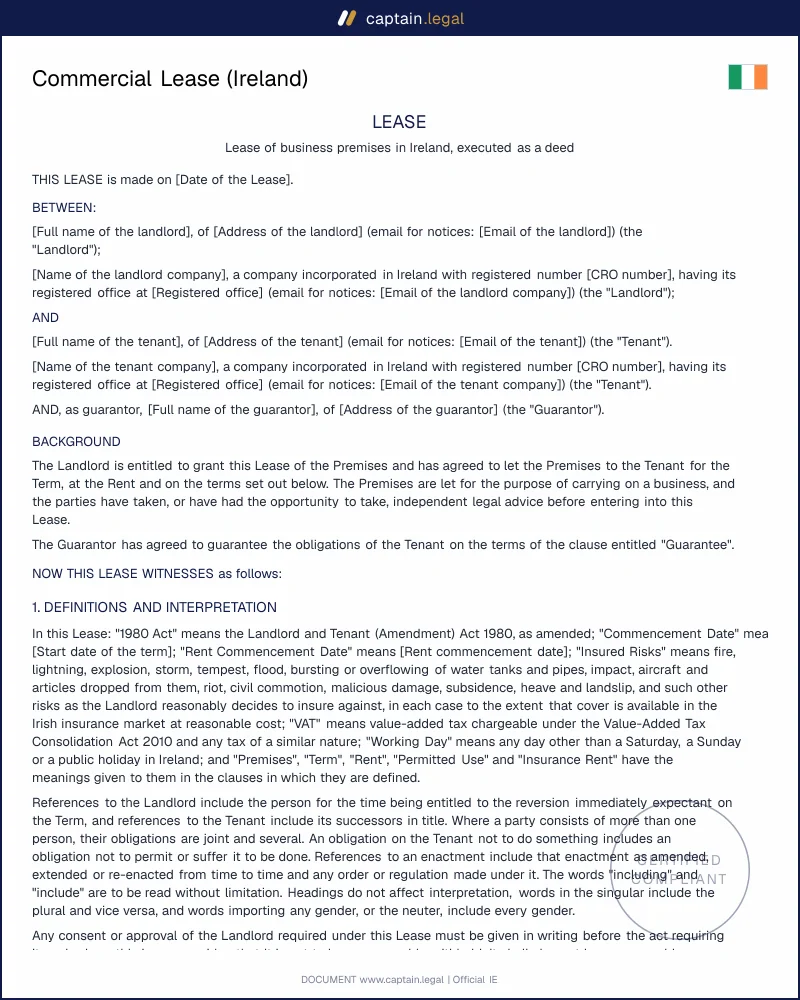
The statute that matters most is the Landlord and Tenant (Amendment) Act 1980. Under section 13(1)(a), as amended in 1994, a tenant whose premises have been continuously occupied by it or its predecessors for five years and used for business acquires the business equity: the right to a new tenancy. If terms cannot be agreed, the Circuit Court fixes them, and section 23(2) sets the duration at twenty years or a shorter term nominated by the tenant. The revised text of the Landlord and Tenant (Amendment) Act 1980 shows every amendment in context. The only way to exclude that right is a renunciation under section 17(1)(a)(iiia), substituted by section 47 of the Civil Law (Miscellaneous Provisions) Act 2008: the tenant must renounce in writing and must have received independent legal advice about it. Any other attempt to contract out is void under section 85.
Beyond renewal, the 1980 Act limits what a landlord can refuse. Sections 66, 67 and 68 turn absolute bans on assignment, change of use and improvements into covenants requiring consent, which cannot be unreasonably withheld. For rent, section 132 of the Land and Conveyancing Law Reform Act 2009 applies to business leases entered into since 28 February 2010, unless the agreement for that lease was signed before that date: a review clause is read as allowing the rent to fall, rise or stay the same, whatever the lease says. Section 16 of Deasy's Act releases a tenant who assigns with written consent from future breaches.
Two tax rules and one reporting duty follow. Stamp duty on a lease of up to 35 years is 1% of the average annual rent, payable within 44 days of execution. A letting is exempt from VAT unless the landlord opts to tax under section 97 of the Value-Added Tax Consolidation Act 2010. Finally, section 88 of the Property Services (Regulation) Act 2011 requires the tenant to notify the PSRA within 30 days of receiving the stamp certificate.