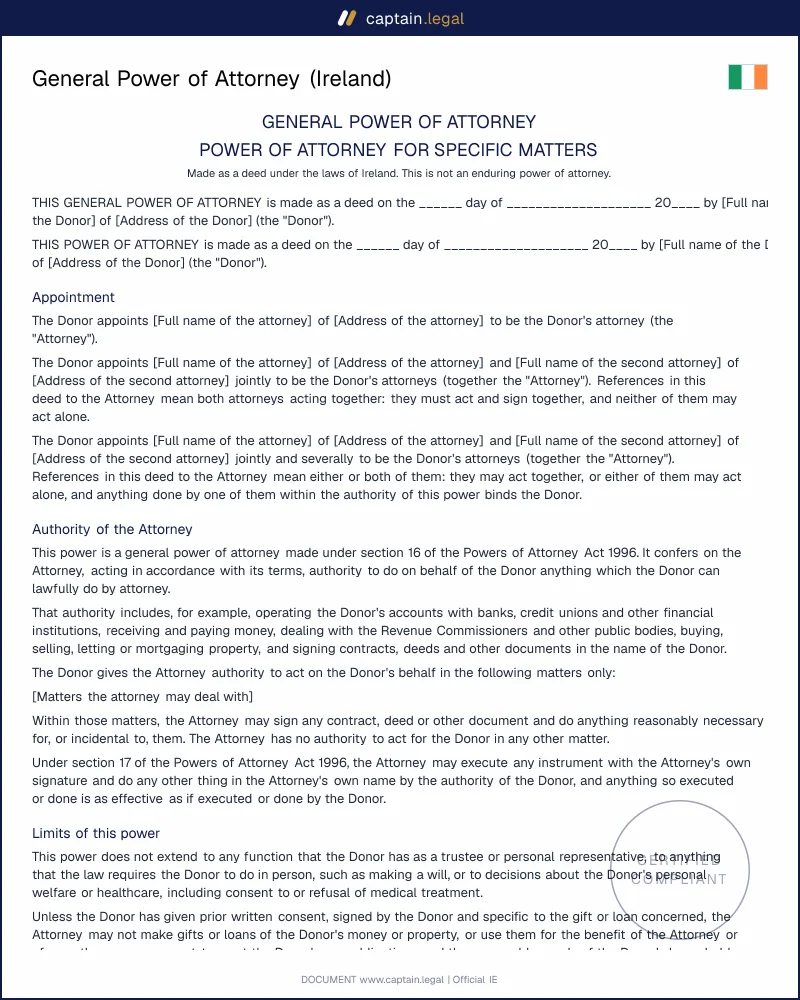
The deed opens with the donor's name and address and the formal appointment of the attorney. With two attorneys, you choose between joint authority, where they must always act and sign together, and joint and several authority, where either can act alone. Next comes the authority itself. The general version repeats the statutory formula from section 16 and gives practical examples, while the limited version confines the attorney to the matters you describe and nothing else.
Protection for the donor takes up the middle of the deed.
- Gifts and loans of your money or property are barred unless you have given prior written consent, signed and specific to that gift or loan, though the attorney can still meet your own bills and household needs. That closes a common route to financial abuse.
- The attorney cannot pass the authority on, but may instruct a solicitor or accountant for matters within the power.
- Trustee and executor functions, healthcare decisions and acts the law requires you to do in person, such as making a will, stay outside the power.
- Records and accounts must be kept, your money must stay separate from the attorney's own, and the attorney acts without pay unless you agree otherwise in writing.
The closing clauses deal with duration, revocation by deed or written notice to each attorney, automatic ending on your death or loss of capacity, the section 18 protections, a clear statement that the deed is not an enduring power, certified copies under section 21, ratification, Irish governing law, and the attestation block for one witness, followed by specimen signatures of the attorneys.