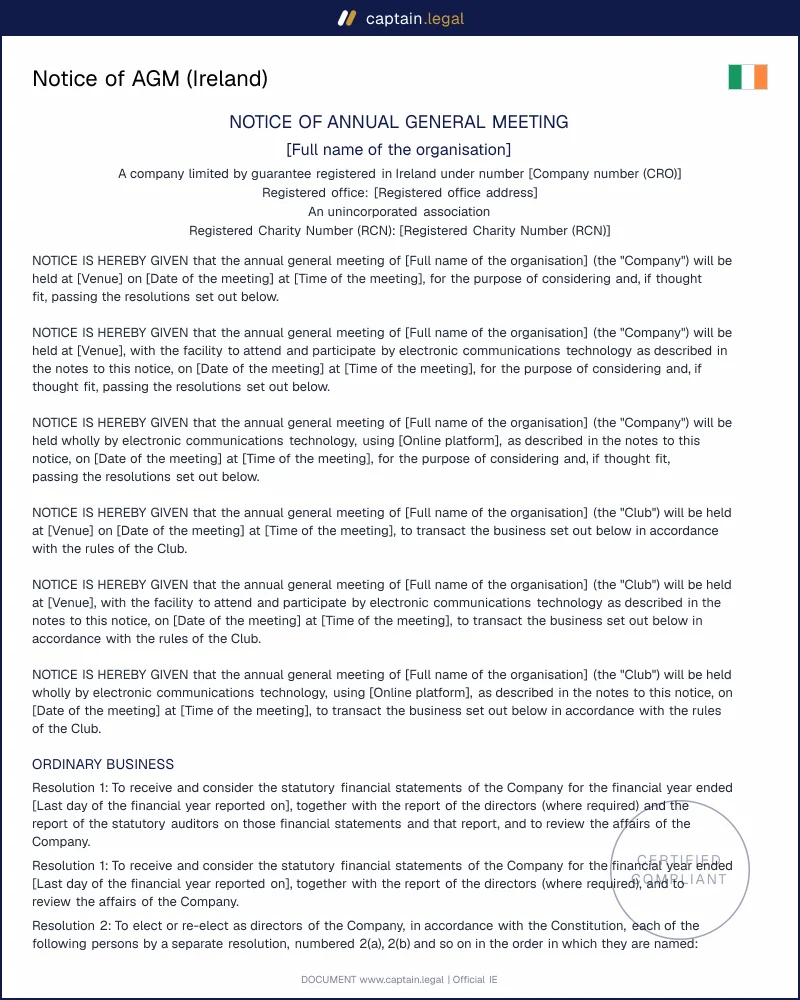
For a CLG, the starting point is section 175 of the Companies Act 2014: an AGM in each year, no more than 15 months between meetings, and a first AGM within 18 months of incorporation. A CLG with more than one member cannot dispense with it by written resolution (section 1202). Under section 181(1), the AGM needs at least 21 days' notice, unless the constitution requires more, and section 181(4) excludes both the day of service and the day of the meeting from the count. A posted notice is treated as given 24 hours after posting (section 181(3)), so posting exactly 21 days ahead is already too late.
Section 181(5) lists the contents: place, date and time; the general nature of the business; the text or substance of any special resolution; and, with reasonable prominence, the statement that a member may appoint a proxy who need not be a member, with the deadline for lodging the form. The company cannot require the form more than 48 hours before the meeting, a period the constitution can shorten but not lengthen (section 183(6)), and the form follows section 184. Where the constitution excludes proxies, section 1204A removes the need for the statement. Online and hybrid meetings are allowed by section 176A, with extra notice contents set by section 181(5)(aa). The Law Reform Commission's revised Companies Act 2014, with the notice and proxy rules as amended shows each provision with its amendments.
The business itself comes from section 186: the statutory financial statements and directors' report, the review of the company's affairs, the auditors' remuneration, director elections where the constitution provides for them, and the auditors. A small company may avail itself of the audit exemption, but in a CLG a single member can block it by notice under section 334, as modified by section 1218. Clubs answer to their own rules.