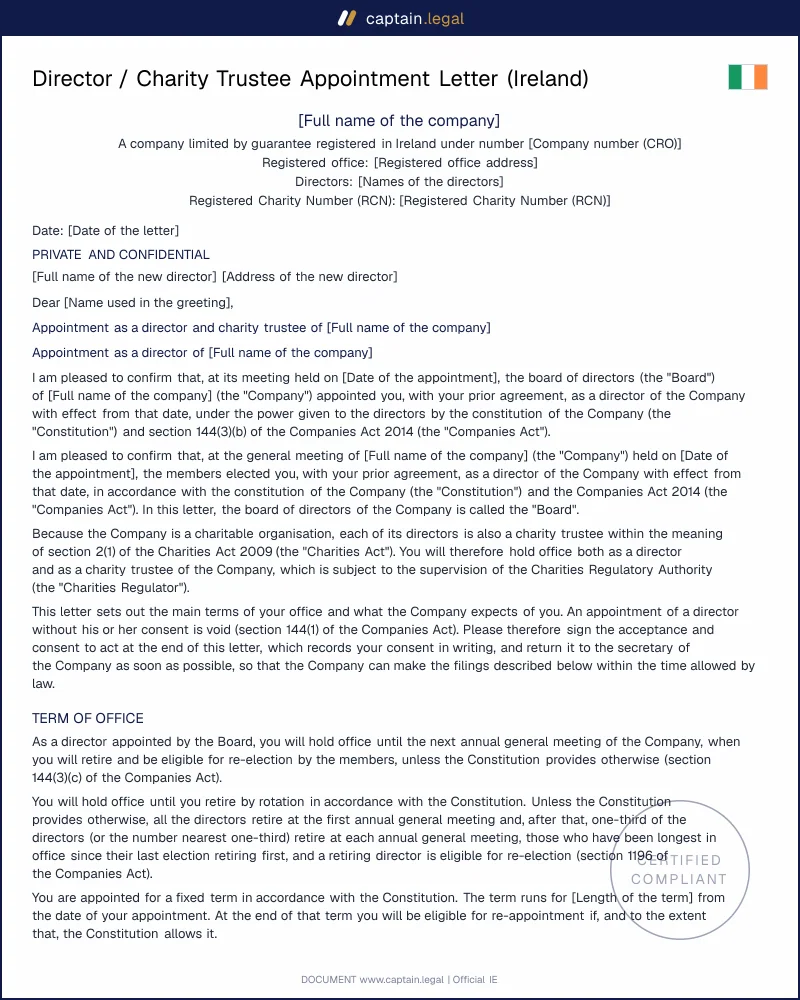
A CLG must have at least two directors (section 1194), each aged 18 or over (section 131), and at least one director must be resident in an EEA state unless the company holds a bond or a certificate under section 140 (section 137). The board may fill a casual vacancy or add a director under section 144(3)(b), and under section 144(3)(c) that person holds office only until the next AGM, unless the constitution provides otherwise. Within 14 days of the change, the company files Form B10 with the CRO (section 149(8)), accompanied by the new director's signed consent (section 149(10)). The consent must carry the statement in section 223(3) immediately above the signature, and section 888A requires the director's PPS number in the notification.
Once in office, the director owes the fiduciary duties listed in section 228(1), including regard for creditors once the directors know the company is insolvent, plus the duty under section 224A to have regard to creditors and to avoiding insolvency when the company is, or is likely to be, unable to pay its debts. Interests in contracts with the company must be declared at a board meeting under section 231.
Charity law adds a second layer. The definition of "charity trustee" in section 2(1) of the Charities Act 2009, as amended, expressly includes any director of a charitable company. Section 55 disqualifies, among others, a person who is adjudicated bankrupt, convicted on indictment or sentenced to imprisonment, and section 56 makes acting while disqualified an offence. Changes to registered particulars must be reported to the Charities Regulator "as soon as may be" under section 39(11). The revised text of the Charities Act 2009 published by the Law Reform Commission flags which amendments are in force and which are still awaiting commencement, including the rules on paying trustees for services.