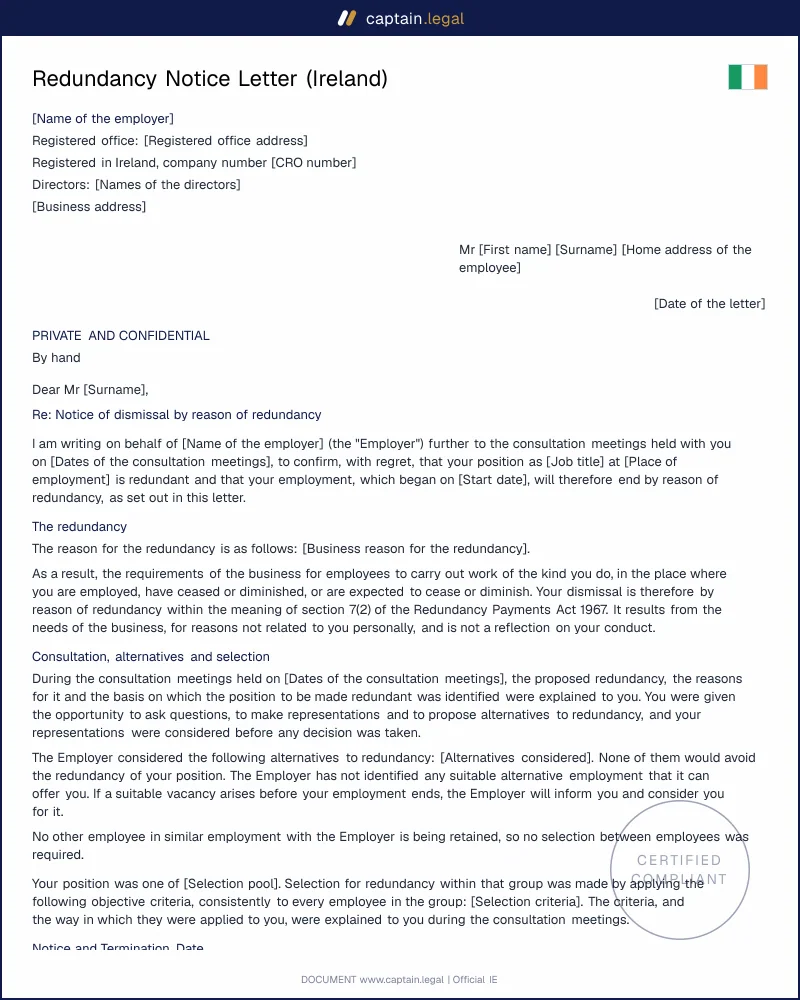
The classic case is a business that loses a large contract. A logistics firm drops from three shifts to two, a supervisor's role disappears, and after two consultation meetings the employer confirms the decision in a redundancy letter. Closures come second: a shop that shuts a branch, or a company that moves its back office abroad, owes each affected employee proper notice and the statutory lump sum.
Restructuring is subtler. When an employer automates invoicing or merges two part-time roles into one post requiring new skills, the redundancy rests on section 7(2)(d) or (e), and the letter must explain the change. Where several people do similar work and only some will go, the employer needs a selection pool and objective criteria, and the letter should say so plainly. Employers often forget employees with less than two years' service: they get no statutory lump sum, but they are still owed minimum notice once they pass 13 weeks' service, holiday pay and, after a year, protection against unfair selection. Charities that employ staff follow the same rules, and their governance paperwork sits in our templates for Irish charities and clubs. Be careful with an employee on maternity or other protective leave, because a termination during that leave is void under section 23 of the Maternity Protection Act 1994.