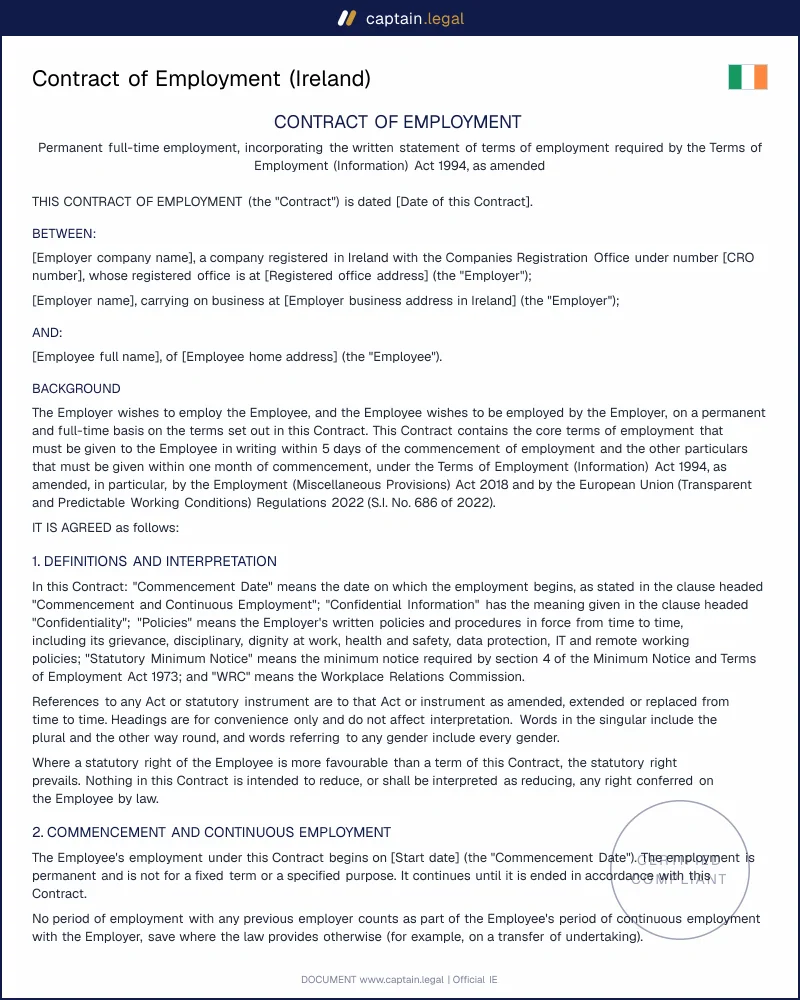
Identity and framework come first. The employer appears either as a company registered with the CRO or as an individual or partnership, and the employee's start date follows. A right-to-work clause switches to a permit variant when the job depends on one. Probation runs for one to six months, with the statutory extension rules written in. The role is described by title, reporting line and main duties, and the place of work adapts to on-site, hybrid or fully remote working.
Time and money fill the middle of the contract. Hours per day and per week, working days and start and finish times are stated as the employer's reasonable expectation, followed by breaks, the 48-hour average, Sunday premium and banded hours. Overtime can be paid at a premium, compensated by time off in lieu, or covered by the salary. Pay, pay day, the pay reference period, payslips and lawful deductions come next. Where customers tip, the tips policy is written out in full. Annual leave is set at or above the statutory floor, statutory sick leave payment can be topped up by company sick pay, and the pension clause points either to MyFutureFund or to an employer scheme.
Protection for both sides closes the document. Confidentiality, intellectual property and data protection guard the business, and the parallel employment clause names the objective grounds section 6E demands. A grievance procedure follows, then the disciplinary and dismissal procedure that section 14 of the Unfair Dismissals Act 1977 requires within 28 days. Lay-off, notice, pay in lieu and garden leave handle the exit, and optional non-solicitation covenants run for six or twelve months. Collective agreements and sectoral orders are named where they apply. The same approach runs through all the Irish legal templates for employers and individuals on the site.