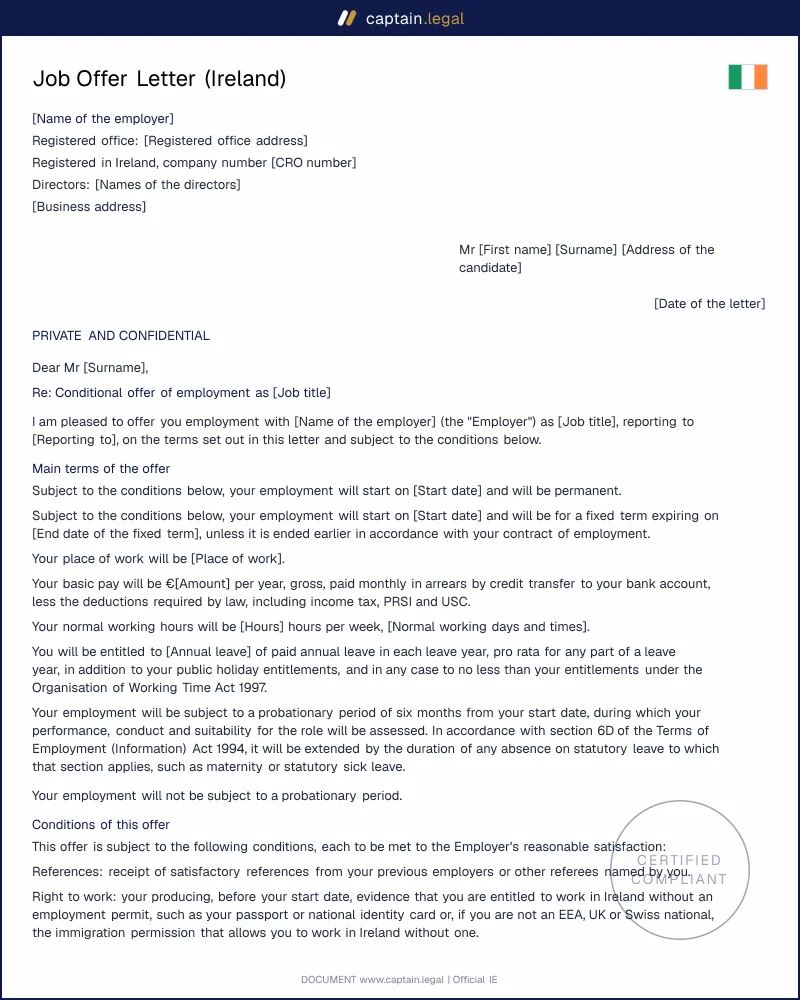
The opening block identifies the employer, with the registered office, CRO number and directors where the employer is a company, as section 151 of the Companies Act 2014 requires on business letters. It names the candidate, the job title and the manager they report to. The main terms follow in plain sentences: a start date, a permanent role or a fixed term with its expiry date, the place of work, gross basic pay per year or per hour with its frequency, normal weekly hours with the daily pattern, and annual leave that never falls below the statutory floor.
Probation is optional. When you choose it, you pick a length up to six months and the clause records that statutory leave extends it, which links to the leave request and family leave notices employees use later. References, qualifications or registration, a medical assessment and Garda vetting each appear only if you select them. The right to work is always covered, either as evidence that no permit is needed or as a full employment permit condition that postpones the start date until the grant. A last condition asks the candidate to confirm that their information is accurate and that no restriction from a former employer stops them taking the role.
The closing clauses let the employer withdraw in writing if a condition fails, even after acceptance, and treat a condition still unmet three months after the letter as failed. They announce the five-day and one-month statements, add a short notice under the Data Protection Act 2018, apply Irish law and end with a signed acceptance slip.