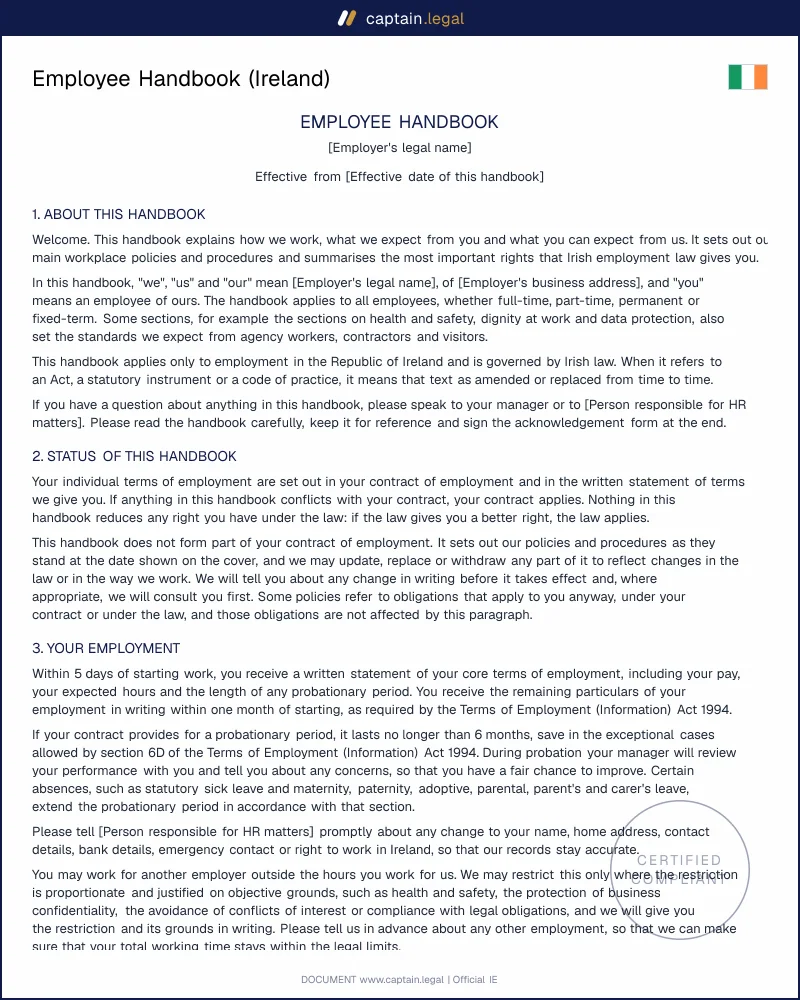
The template opens with the status of the handbook, because this is the point most often argued about later. You choose whether it is a statement of policy only, whether only the disciplinary procedure is contractual, or whether the whole handbook forms part of each contract. Each option produces matching wording in the status section, the disciplinary procedure and the acknowledgement form on the last page. The contract and statutory rights always prevail.
Working life comes next. Hours, breaks and timekeeping sit with pay and lawful deductions, MyFutureFund and expenses, then annual leave with its carry-over rules, the ten public holidays and sickness absence. You set the reporting deadline, the self-certification period and whether you pay sick pay or a maternity top-up beyond the State benefits, and the handbook writes the scheme in full. The family leave sections summarise maternity, paternity, adoptive, parent's, parental, carer's, force majeure, medical care and domestic violence leave with their real notice periods.
An adjudication officer will read the procedures closely. The grievance procedure runs in three stages, from an informal conversation to a formal written complaint and then an appeal; the disciplinary procedure covers investigation, precautionary suspension on full pay, representation, warnings that lapse, gross misconduct and appeal. When a warning is needed, our disciplinary warning letter for Irish employers applies the same steps. Dignity at work and protected disclosures follow, with a version for under 50 and one for 50 or more employees, then the everyday rules on equality, disconnecting, safety, alcohol and drugs, IT, data and gifts, and what happens when someone leaves. Remote working, vehicles and dress code appear only if you select them.

 Irish law 2026